Digital twins are easy to demo. Why are they so hard to build into mission systems?

Article originally published in National Defense Magazine, November 2026, pages 24–25. Content republished with permission.
By Trishna Lovley, Director and Digital Twin Lead at Booz Allen and Parker Wright, Senior Director at Unity Technologies.
In the field today, there are soldiers and operators making decisions that have already been made millions of times before. While those individuals may not realize it, countless possibilities have already been played out, failed, adapted, and improved—including the wildest, most improbable mission scenarios that will never materialize.
Because of advances in digital twin technology, the military is profoundly shifting the definition of “readiness.” Instead of declaring that a soldier, system, process, or asset is ready for action after a linear series of tests in the real world—more defense programs are proving readiness in a virtualized, continuous, and infinite loop.
The most effective digital twins are like insurance policies, designed to de-risk some of the most critical missions—advancing the Pentagon’s standards for digital engineering and T&E (testing and evaluation). But despite clear value and momentum across military programs, the adoption of full, system-level digital twins is not yet widespread. If the underlying technology exists, why is that?
Virtualization: The first of many hard problems
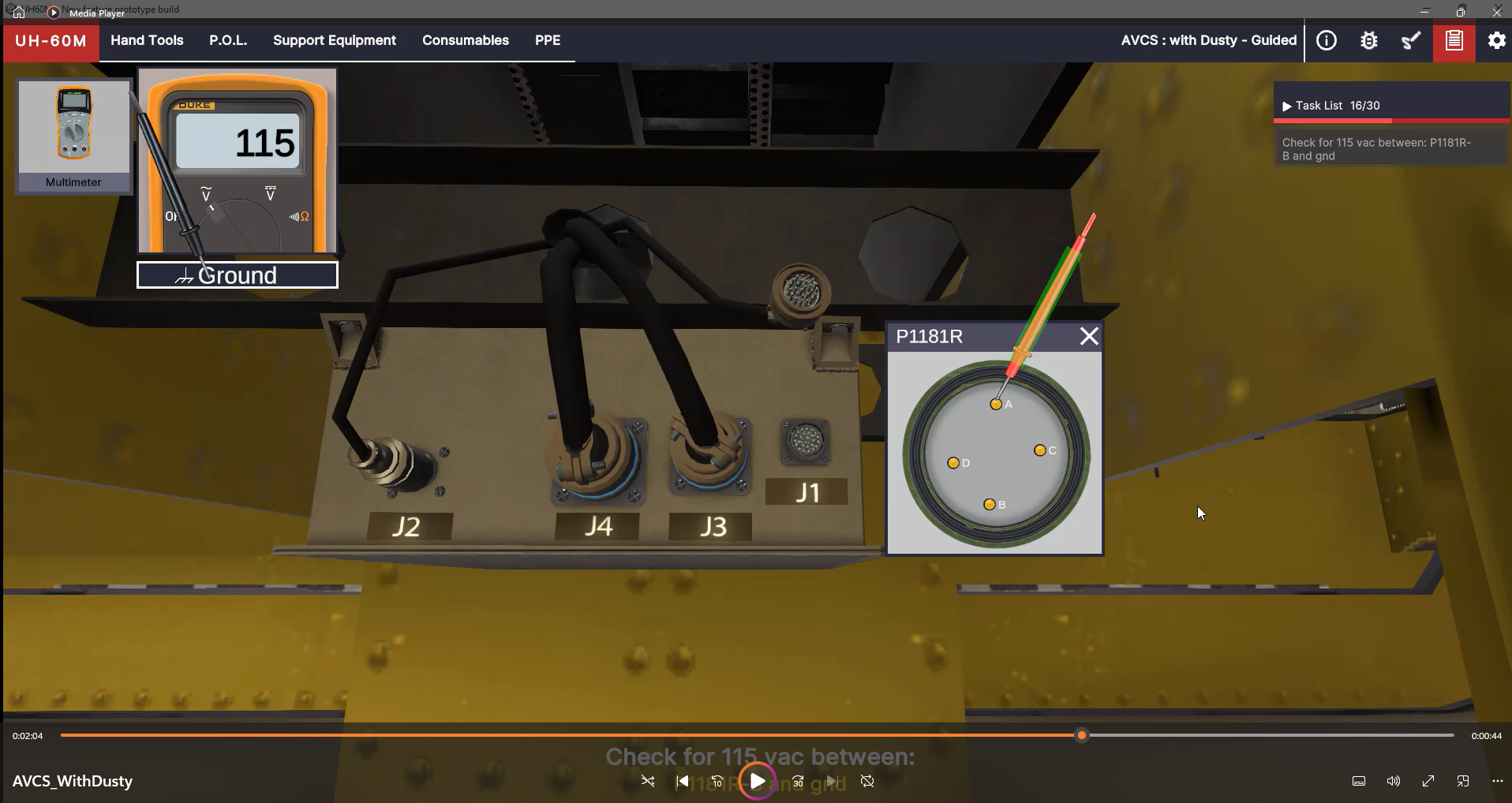
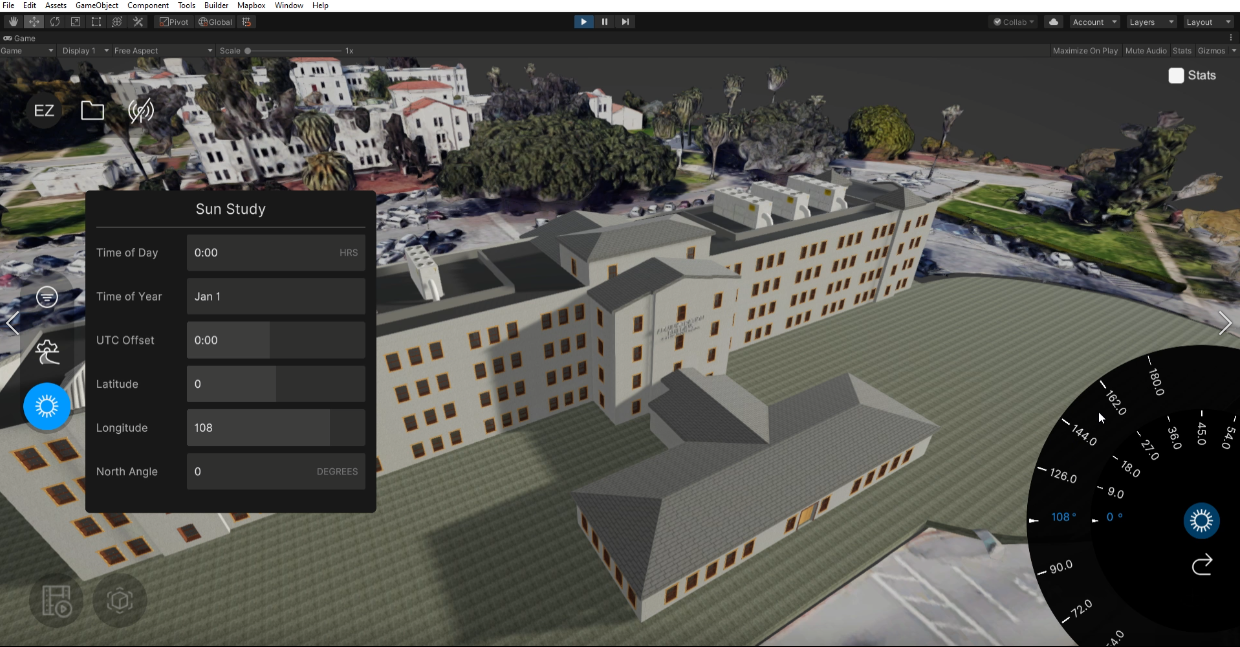
Visually impressive, highly realistic replicas of the real world are obviously a key ingredient for digital twins. But we know that isn’t the bottleneck in military modeling, simulation, and training; programs are already virtualizing everything from military bases to the parts and pieces of specific defense platforms. The bigger challenge today is building digital twins that become valuable mission infrastructure.
Let’s dig into a real example. In the Midwest, there is a key military training facility where soldiers have long conducted system exercises, and defense companies have historically validated new devices. Recently, our teams at Booz Allen and Unity have virtualized this environment, so system testing can now happen rapidly and repeatably, before committing any physical resources.
Within this environment, soldiers and industry partners play scenarios like:
- How weather conditions impact visualization, from rain to fog to snow
- The operational impact of jamming and weather on radio frequencies and sensors
- Realistic command and control to identify adversaries, friendlies, and neutral parties
From scanning radio frequencies and Light Detection and Ranging (LiDAR), to reconstructing visuals, we’ve navigated several technical challenges to render the 3D simulation and then integrate relevant mission models. Along the way, we’ve found four challenges that every program must solve to make a digital twin core mission infrastructure, and here is how we approach each.
1. A vast foundation model with synthetic data.
There’s only so much data to capture in the real world in a set amount of time to inform a rich and robust digital twin. In practice, the best way for mission operators to rapidly train against one-in-a-million possibilities is to ingest multi-modal data from the physical world and use that to generate high-quality synthetic data. Synthetic data allows developers to fill in the gaps. By training with real and synthetic data, virtual model development can happen on a massive scale—allowing the model to blend and randomize variables to mirror the unscripted nature of reality.
2. Simulation of the exact environment and hardware.
We know digital twins can’t match reality, one for one. But when the virtual world diverges too much from the target mission, a digital twin can systematically bias outcomes. For example, if models are overly simplified, if adversaries are predictable, if controllers and screens don’t match real physical hardware—the sim-to-real gap can introduce false assumptions.
So, when building synthetic environments, we take biases into account. Ultimately, operators don’t need a digital twin to reinforce existing beliefs or inherent designer biases—they need it specifically to challenge them.
3. A continuous, two-way flow of live data.
Digital twins sustain value for the mission if learnings from the field can continually feed back into the system and refine the foundation model and the simulation over time. The challenge is keeping that data loop running, so live data flows into the twin and learnings flow back out without lag.
Sustaining that loop takes a data pipeline designed for continuous synchronization instead of periodic updates. We see this in practice with Booz Allen’s digital twins for live events, where decisions need to be made based on minute-by-minute dynamics. That data pipeline analyzes inputs like crowd density, video feeds, and sensor data to spot patterns and flag issues as they emerge. To fully sync physical and digital environments, we design it so near-real-time information can flow back and forth in a continuous, virtual loop.
4. Deep integration across the mission lifecycle.
A digital twin should present a common operating picture for decision makers. It needs to provide the right context, at the speed of mission, without creating risks or surprises throughout a highly complex mission lifecycle. That’s harder than it sounds, because the twin must connect with the people, processes, and systems around it, not just model the asset itself.
Consider a civil engineer using a digital twin to make maintenance decisions: they need to be sure that the twin works in tandem with other related systems; personnel processes, workflows, and handoffs; and downstream dependencies that may bleed into other mission sets. That requires tight integration between otherwise discrete systems, lots of unstructured data, and the physical mission as it unfolds—all feeding into the digital twin in near-real-time.
Ultimately, digital twins become core mission infrastructure when they are more than a virtualization or a one-way mirror of the real world. That’s why we focus on building living cyber-physical systems that help soldiers and operators continuously prove readiness—long after first deployment.
Related content