How Lockheed Martin is transforming military maintenance training with Unity-powered digital twins

Subarna Ganguly Marshall - Unity
Senior Content Marketing Manager - Industry

Overview
Lockheed Martin's eXtended Reality Lab (XRL) uses Unity to build immersive digital twin and virtual maintenance training (VMT) solutions that improve military readiness by making high-quality aircraft maintenance training available anytime, anywhere.
Use case
Virtual maintenance training for U.S. Marine Corps C-130 maintenance personnel, delivered through immersive digital twins across VR, AR, desktop, tablet, and classroom environments.
Solutions
Unity real-time 3D platform, XR Plugin Management, OpenXR Plugin, XR Core Utilities, AI Navigation, ML-Agents, Project Auditor, Build Profiles, glTFast.
Customer
Lockheed Martin
Delivering measurable outcomes at scale for defense organizations
By leveraging Unity's real-time 3D technology, Lockheed Martin's eXtended Reality Lab (XRL) developed the Extend Framework, a scalable digital twin platform that delivers measurable operational benefits across military training, maintenance, and sustainment.
- Up to 70% greater knowledge retention
Immersive virtual maintenance training (VMT) has demonstrated up to a 70% improvement in knowledge retention compared to traditional PowerPoint-based instruction, helping personnel build confidence and proficiency before working on operational aircraft.
- Reduced reliance on operational aircraft
Highly detailed digital twins enable students to learn procedures and explore aircraft systems in a realistic virtual environment, reducing dependence on scarce, mission-critical aircraft for routine training.
- Train anytime, anywhere
Available across VR, AR, desktop, tablets, and classroom displays, the Extend Framework gives users 24/7 access to training content, whether in the classroom, at operational squadrons, or in remote locations.
- Scalable, consistent training
The same training experiences can be deployed across multiple devices and locations, supporting standardized instruction from the schoolhouse through to operational deployment while enabling multiple students to train simultaneously.
- Faster content creation with digital twins
By using engineering data to create living digital twins, Lockheed Martin can rapidly develop and update training content while maintaining accuracy throughout the platform lifecycle, reducing the time and cost of traditional content development.
- Designed around instructor feedback
Rather than replacing instructors, the Extend Framework evolves through continuous collaboration with end users. Many of its most valuable capabilities have been shaped directly by instructors to ensure the platform addresses real operational training needs.
- Future-ready training platform
Built on Unity, the Extend Framework provides a foundation for continued innovation, including AI-assisted content authoring, adaptive learning experiences, intelligent tooling, and expanded digital twin capabilities across future defense programs.
These outcomes demonstrate how software-defined, digital twin-based training environments can help defense organizations improve readiness, increase accessibility, reduce costs, and modernize maintenance training at scale.

XRL - Extend program. Video courtesy Lockheed Martin.
Training the maintainers behind mission readiness
As one of the world's leading aerospace and defense companies, Lockheed Martin develops advanced technologies that support national security, sustainment, and mission readiness across air, land, sea, space, and cyber domains. Within the company, their eXtended Reality Lab (XRL) brings together digital twin architects, software engineers, 3D artists, and developers to create immersive solutions for training, maintenance, and service operations.
Using Unity as the foundation for its real-time 3D development, XRL is helping transform how complex defense systems are experienced, understood, and maintained. From interactive digital twins to AI-enabled workflows and immersive maintenance training, the team develops scalable applications that make critical information more accessible to users wherever they are.
As defense organizations face increasingly complex platforms and rapidly evolving operational requirements, ensuring personnel have continuous access to accurate, up-to-date training has become more important than ever. Traditional classroom instruction and limited access to operational aircraft alone are no longer enough to meet the growing demands of modern military readiness.

Snapshot of the digital twin training module. Image courtesy of Lockheed Martin.
Moving beyond traditional maintenance training
Training military maintenance personnel has traditionally relied on a combination of classroom instruction, slide deck presentations, instructor-led demonstrations, and valuable but limited hands-on time with operational aircraft. While these methods remain essential, they can be constrained by aircraft availability, high operating costs, and the practical realities of taking mission-critical assets out of service for training.
As modern defense platforms become increasingly sophisticated, the need for accurate, up-to-date information has also grown. Personnel require access to training that reflects the latest engineering configurations and operational procedures, not just during scheduled classroom sessions, but whenever and wherever they need it.
Lockheed Martin recognized an opportunity to rethink how maintenance knowledge could be delivered. Rather than relying solely on physical aircraft and traditional courseware, the company set out to create a digital training environment that would complement existing instruction while making immersive, interactive learning more accessible, scalable, and responsive to changing operational requirements.
To achieve this, the solution needed to:
- Provide continuous, on-demand access to training beyond the classroom
- Reduce reliance on operational aircraft for foundational maintenance training
- Deliver highly accurate digital twins that remain aligned with evolving engineering data
- Support consistent learning across schoolhouses, operational squadrons, and distributed locations
- Enable immersive training across multiple devices, including VR, AR, desktop, and mobile platforms
- Scale efficiently while reducing the time and cost required to develop and maintain training content
That challenge led the U.S. Marine Corps to partner with Lockheed Martin to rethink how C-130 maintenance personnel are trained. The result was the Extend Framework, a Unity-powered digital twin platform that delivers immersive Virtual Maintenance Training (VMT) across VR, desktop, tablet, AR, and classroom environments, enabling personnel to build confidence and proficiency before stepping onto the flight line.

C-130 Digital Twin for maintenance personnel training. Image courtesy of Lockheed Martin.
Building the Extend Framework with Unity
At the heart of Lockheed Martin's immersive training ecosystem is the Extend Framework, a Unity-powered platform that combines highly accurate digital twins with real-time 3D visualization to create scalable training experiences for maintenance personnel.
Designed by the eXtended Reality Lab (XRL), the framework provides a standardized development environment that enables multiple developers to build, maintain, and expand training procedures simultaneously. Rather than creating separate applications for different devices, the team develops content once and deploys it across virtual reality (VR), augmented reality (AR), desktop, tablets, Microsoft HoloLens, and large-format classroom displays using Unity.
The platform also provides students with continuous access to immersive learning experiences beyond the classroom. Whether completing coursework on a tablet, participating in instructor-led sessions on interactive displays, or practicing maintenance procedures in VR, users interact with the same highly detailed digital twin of the aircraft throughout their learning journey.
By standardizing development around a single Unity-based framework, Lockheed Martin can rapidly scale new courses, accelerate content updates, and ensure consistency across training environments while reducing the complexity of supporting multiple platforms.
Inside the application: immersive maintenance training powered by digital twins
The Extend Framework transforms traditional maintenance training into an interactive, visual learning experience centered around highly accurate digital twins of real aircraft.
Instead of relying on classroom instruction or limited access to operational aircraft, students can explore complex systems, follow guided maintenance procedures, and practice critical tasks within a realistic virtual environment that mirrors the physical platform.
Users can:
- Explore detailed digital twins of aircraft systems and components.
- Follow step-by-step maintenance procedures in immersive environments.
- Learn and practice anytime through VR, AR, desktop, tablets, and classroom displays with 24/7 access to training content.
- Track progress throughout training while building confidence before working on operational aircraft.
- Continue learning outside scheduled classroom sessions with 24/7 access to training content.
The same platform supports classroom instruction, individual learning, and field-based Virtual Maintenance Training (VMT) through mobile deployment units, enabling a consistent learning experience from the schoolhouse through to operational squadrons.
Because the digital twins are built directly from engineering data, training content remains accurate, up to date, and aligned with the latest aircraft configurations throughout the platform lifecycle. As engineering models evolve, the corresponding training experiences can be updated more efficiently, helping ensure maintainers always train on the most current equipment and procedures.

C130 Training module. Image courtesy Lockheed Martin.
Building with Unity: a flexible foundation for digital twin training
Unity provides the real-time 3D foundation behind the Extend Framework, enabling Lockheed Martin to consolidate visualization, development, testing, deployment, and ongoing enhancement within a single production environment.
The XRL team uses Unity throughout the development lifecycle:
- Real-time 3D digital twinsUnity provides the visualization layer for highly accurate aircraft digital twins, enabling immersive maintenance training across multiple platforms while supporting rapid content updates as engineering data evolves.
- XR development frameworkUnity's XR stack including Plugin Management, OpenXR Plugin, and XR Core Utilities enable deployment across VR and AR devices, giving users access to immersive training experiences wherever they are.
- Cross-platform deploymentUsing Unity multi-platform build profiles, Lockheed Martin creates a single application that can be deployed across VR headsets, desktop PCs, tablets, Microsoft HoloLens, and large-format touch displays, eliminating the need to maintain separate applications for each platform.
- Efficient content managementLighting is baked directly within Unity, while Asset Bundles efficiently manage the large volume of aircraft models and training assets required for complex maintenance simulations.
- Optimized development workflowsUnity Project Auditor helps identify optimization opportunities, while packages including AI Navigation, ML-Agents, Post Processing, and glTFast extend the platform with intelligent behaviors, improved visualization, and runtime performance enhancements.
By keeping authoring, testing, asset management, optimization, and deployment within Unity, the team has significantly streamlined production workflows while reducing development complexity.
“We use Unity to support our expansion into new markets and address complex operational challenges. Alongside training solutions, we currently utilize the platform to develop AI-enabled capabilities and manage system integrations. ”

Trevor Levandoski - Lockheed Martin
Senior Manager Extended Reality Lab
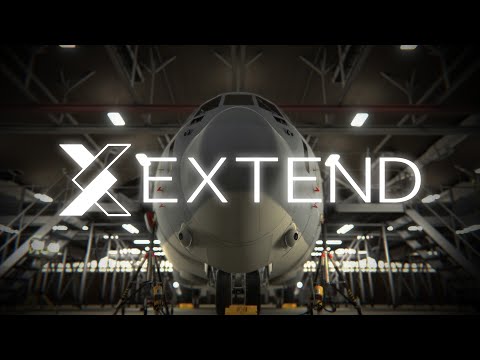
Super Hercules program - Extend Framework. Video courtesy Lockheed Martin.
Designed to evolve with every project
The Extend Framework continues to grow with every customer engagement.
Each new project contributes additional capabilities back into the platform, enabling Lockheed Martin to continually refine authoring workflows, improve performance, and expand the range of supported training experiences.
By combining Unity's evolving real-time 3D technology with its own innovation roadmap, Lockheed Martin is building a future-ready platform capable of supporting the next generation of digital twin applications and immersive training.

US Marine Corps C-130 aircraft. Image courtesy Lockheed Martin.
Beyond virtual training: building the future of defense readiness
The success of the Extend Framework demonstrates a broader shift in how defense organizations are approaching training, maintenance, and knowledge transfer. Rather than relying solely on physical platforms and static courseware, organizations are increasingly adopting software-defined training environments that make critical information continuously accessible, adaptable, and easier to maintain.
By combining highly accurate digital twins with immersive real-time 3D experiences, Lockheed Martin is helping organizations deliver consistent training across classrooms, operational units, and geographically distributed teams while reducing dependence on scarce physical assets.
The same approach is already being applied beyond the C-130 program. Today, the Extend Framework supports the development of training and visualization solutions for radar systems, ships, rotary aircraft, and additional aircraft platforms, demonstrating how a common Unity-based foundation can accelerate innovation across multiple defense programs.
As digital twins, artificial intelligence, and immersive technologies continue to converge, platforms like Extend will play an increasingly important role in ensuring personnel have access to accurate, up-to-date information throughout the lifecycle of complex defense systems.
Looking ahead: AI-powered digital twins and the next generation of Extend
Following the successful deployment of the initial Marine Corps training program, Lockheed Martin is expanding the Extend Framework across additional maintenance courses while continuing to evolve the platform's capabilities.
The recently released Extend Framework 4.0 introduces new AI-driven functionality and performance improvements, while development of Extend Framework 5.0 is already underway. Planned enhancements include AI-assisted content authoring, automated model texturing, adaptive learning experiences, intelligent development tools, and enhanced collaborative capabilities delivered through the web.
For the XRL team, Unity continues to provide the technology foundation that enables rapid innovation, helping developers integrate new capabilities, accelerate production workflows, and adapt to evolving customer requirements.
Ultimately, the vision extends well beyond immersive training. By combining real-time 3D, digital twins, AI, and scalable cross-platform deployment, Lockheed Martin is creating a platform that will help shape the future of defense training, maintenance, and sustainment for years to come.
More from Unity


