Digital transformation: the key to success in the industrial metaverse
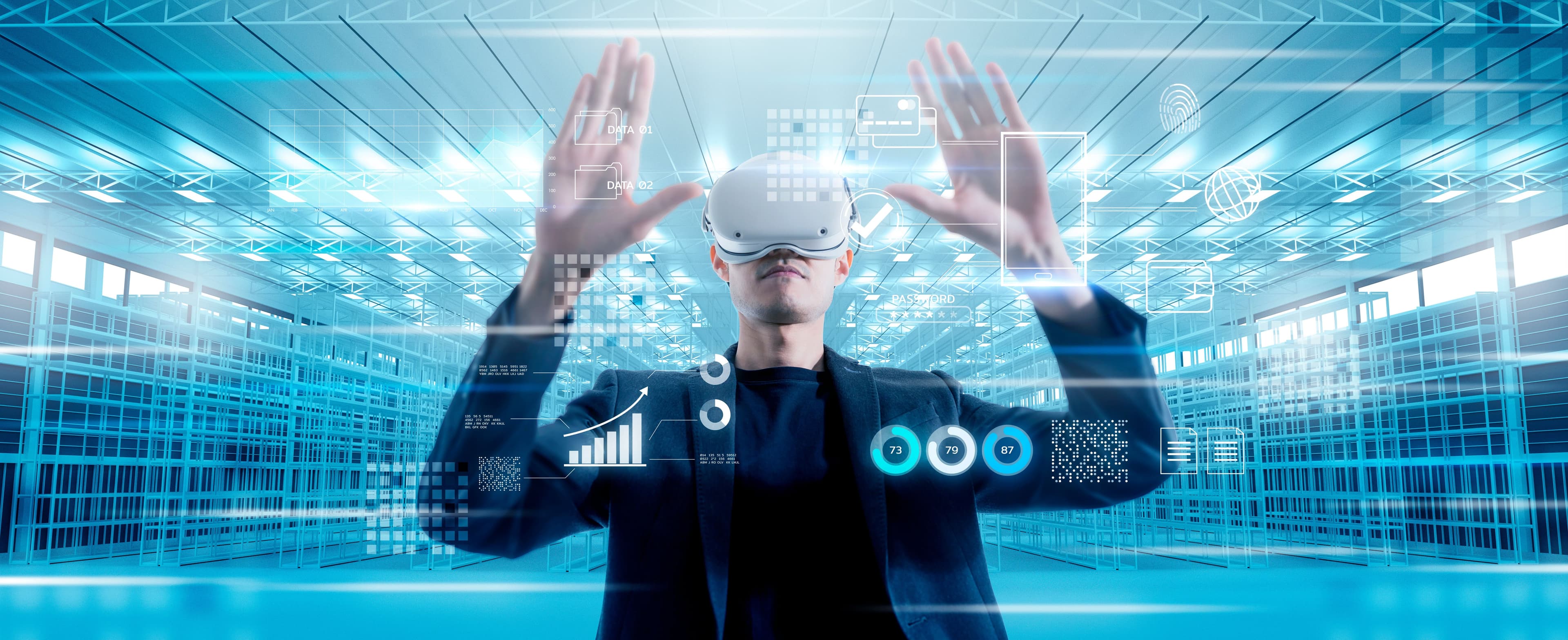
An exploration of how to jump into the industrial metaverse using the stepping stone of digital transformation - and why you don’t want to miss out.
Executive summary
The metaverse was envisioned primarily for consumer-oriented activities like gaming, entertainment, social networking, and building virtual economies as found today in platforms such as Roblox, Decentraland, and Horizon Worlds.
In contrast, the industrial metaverse focuses on industrial applications, emphasizing efficiency, productivity, and innovation in fields like manufacturing, automotive, and logistics. It incorporates tools such as digital twins, simulations, and real-time collaboration, to improve operations, design, and training.
In this ebook, you will learn:
- What is driving the evolution of the industrial metaverse
- The transformative potential of the industrial metaverse
- The importance of digital transformation
- What technologies make the industrial metaverse a reality
- What tangible results have been achieved
- 3 reasons why you can’t afford to wait to jump in
“The industrial metaverse is the next iteration of data connectivity and accessibility. It is also the acceleration of the connecting pieces, improving how data can be fed from one system to another.”

Henning Linn - Unity
Senior Director, Industry Customer SuccessThe industrial metaverse: a primer
The industrial metaverse is a way to blend immersive 3D technologies with real-world enterprise applications. Its principal uses are for internal business processes and customer engagements.
It is a digital workspace where businesses can test, design, and improve their operations without risking time or money in the real, physical, world. Think of it as advanced digital simulations—or virtual replicas—of factories, machines, or systems, where multiple teams can work together in digital 3D spaces to solve problems, train workers, or optimize processes.
It is also a virtual showcase for products of all shapes and sizes. In the industrial metaverse businesses engage customers on a new level. It provides an immersive platform for customers to virtually experience products wherever they are, creating a greater sense of engagement and improving likelihood-to-purchase.
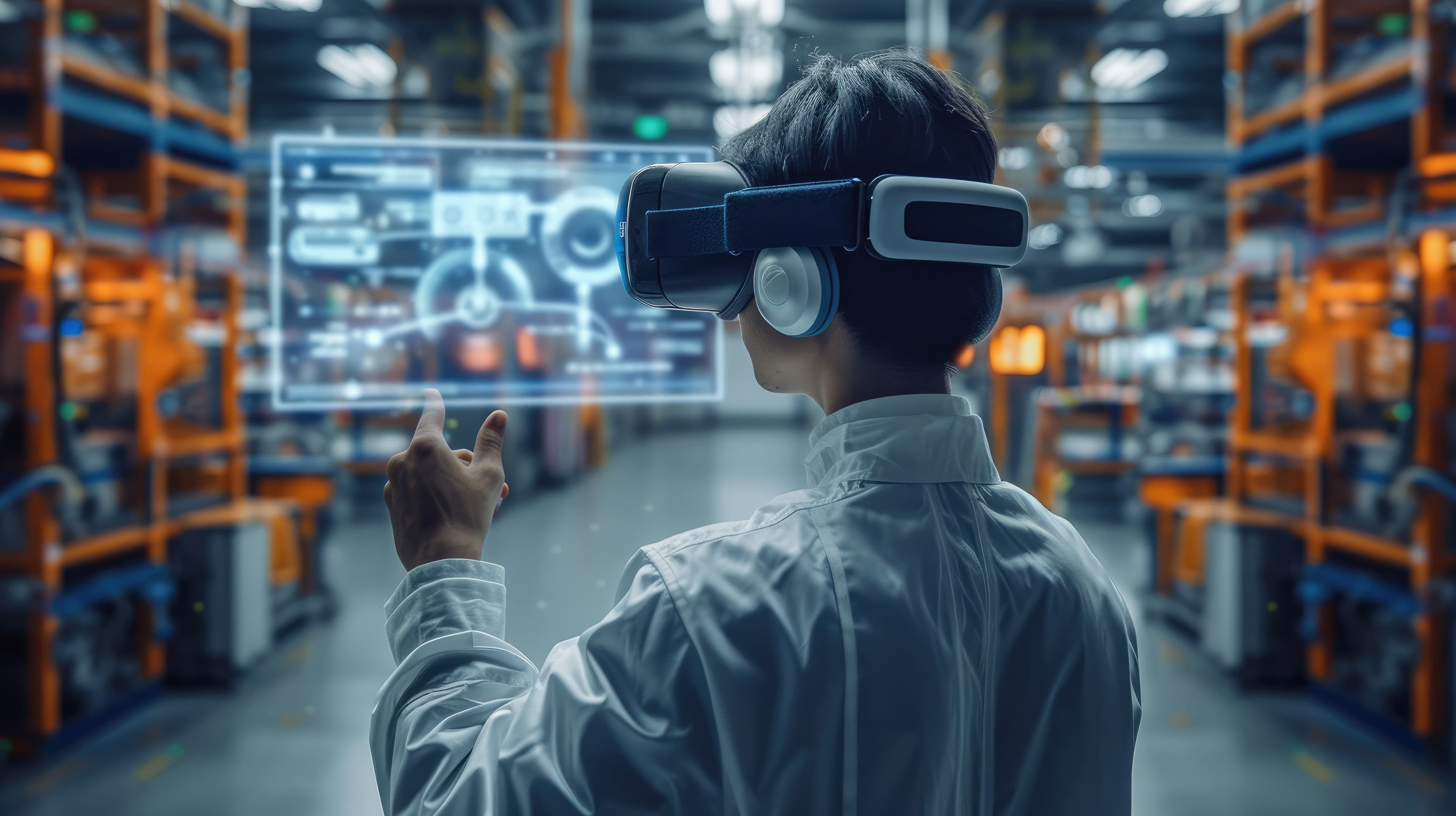
The industrial metaverse uses tools like virtual reality (VR), augmented reality (AR), and extended reality (XR) to let people "step inside" these virtual worlds.
The underlying real-time 3D technology enables incorporation of real-world data such as sensors, internet of things (IoT), global product catalogs, materials information, and more. All to create an accurate, real-time virtual representation of the environment or products.
The industrial metaverse blends immersive 3D technologies with real-world information to work smarter, save money, better engage customers, and make safer, faster decisions.
What is accelerating interest in the industrial metaverse?
PwC’s 2024 Digital Trends in Operations Survey identified that nearly seven in 10 (69%) operations and supply chain executives felt that their technological investments overall were failing to meet expectations.
Among the numerous challenges faced by industrial firms are:
- Keeping up with a rapidly evolving market
Technology and business models are evolving so fast that industry firms must project their vision forward and invest in new tech to maintain a competitive edge.
- Enabling collaboration and strategic decisions across distributed organizations
Workforces are scattered across multiple continents and time zones. Employees and executives alike are out of sync, making collaboration problematic.
- Achieving an enterprise-wide view of siloed data
Although more data than ever is digitized, stored in the cloud, and accessible, it remains highly siloed within most organizations.
- Empowering people to interact with and understand data
Taking complex data sets, integrating them with others, and visualizing them in such a way that people can immediately grasp the context and the implications.
Exploration: the transformative potential of the industrial metaverse
How does the industrial metaverse fit across different types of business?
By focusing on tangible applications like training, customer experiences, collaboration tools, and sales and marketing uses, the possibilities are many.
Let’s take a look at some of those possibilities:
Streamline operating processes
Objective: Assess existing processes, workflows, and systems.
Application: An oil refinery creates a digital twin of its entire plant. Maintenance personnel can virtually explore it, interact with components, and simulate maintenance tasks. This includes identifying wear and tear, planning the sequence of repairs, and ensuring all safety protocols are followed.
Benefits: Significant reduction in maintenance downtime and costs due to better planning as well as preventing human error.
Check out a real-life example, powered by Unity: Sentient INDI
Transform business models
Objective: Move from traditional business models to more innovative ones.
Application: A heavy machinery manufacturer could shift to a product-as-a-service (PaaS) model, where clients pay for using its products rather than purchasing them outright.
By deploying digital twins of its machinery and syncing them with IoT sensors on the physical machines, companies can access data on performance, usage, and wear. Customers could be charged based on usage of the equipment (eg: hours of operation, or production output) rather than ownership.
Benefits: The manufacturer generates a new, and recurring, revenue stream through the PaaS model, improving financial predictability.
Transform industries
Objective: Explore new territories, industries, or projects.
Application: Construction companies use digital technologies to build 3D models of projects that revolutionize how buildings are designed, constructed, and managed, leading to overall gains in efficiency, sustainability, and cost savings.
Benefits: Detecting potential issues before physical construction begins reduces costs, minimizes errors, and shortens project timelines.
Check out a real-life example, powered by Unity: Obayashi
Transform workforces and cultures
Objective: Drive employee collaboration, innovation, and agility.
Application: Teams across different locations collaborate in real time in virtual 3D “rooms” where they can see and hear each other as if they were on-site together, while simultaneously reviewing 3D digital versions of products.
Benefits: Drives better communication with and between employees, faster decision-making, and more rapid time-to-completion of projects.
Transform customer and partner experiences
Objective: Deliver more engaging experiences to customers.
Application: An automotive manufacturer offers customers a 3D virtual showroom where they explore and customize vehicles in detail without leaving their homes. Customers can interact with a car's features, change its colors, interior options, and accessories in real-time, and view these changes from any angle.
Benefits: The automotive manufacturer helps customers make more informed decisions, increasing satisfaction and engagement levels.
Check out a real-life example, powered by Unity: Brose Group
Why digital transformation is key
The prevalence of smart and connected products in many industries continues to grow as companies seek to improve functionality and user experience through software and electronics, and an increased interest in sustainable solutions.
Meanwhile, challenges related to supply chain management, workforce dynamics and sustainable innovation drive uncertainty while also creating opportunities for companies to gain a competitive advantage through creative solutions.
These pressures and challenges are pushing companies to innovate how they operate and what they offer to the market. Advancements in real-time 3D rendering, AI, and cloud computing have paved the way for the industrial metaverse.
To thrive in the future, it is critical for companies to become more resilient, agile and adaptive to dynamic conditions. This is possible through digital transformation, and by embracing the industrial metaverse as a key component.
“Data is digitized but not connected. For example, data describing how a product behaves is not tied to product data. To simulate behavior, manual links are made. The industrial metaverse connects data silos. Digital transformation makes it possible.”
Henning Linn - Unity
Senior Director, Industry Customer SuccessReal-time 3D: A foundational technology for the industrial metaverse
One of the most critical innovations for organizations embarking on digital transformations today is real-time 3D.
Real-time 3D is a technology that generates and displays computer-generated 3D images that can be experienced rather than just viewed. And—as its name implies—these images are updated in real time, meaning they change immediately based on the behavior of users.
Originally developed to create video games, real-time 3D has been widely adopted by industrial firms. It powers immersive and interactive experiences where virtual worlds react instantly to user behavior.
Proof points from real-time 3D applications
Mature and high-performing real-time 3D technology is already here. Real-time 3D has been adopted by companies as varied as manufacturers, luxury retailers, automakers, and more. Here are a few examples:
Thermo Fisher Scientific streamlines XR production with a single asset library
The global science and clinical research company created an XR-based platform that draws on a single source of 3D assets to deliver solutions such as digital twins, sales enablement, training, serious games, and more.
The outcomes of the XR platform include:
- 250% improvement in asset pipeline efficiency
- Accelerated development time by using low code / no code visual scripting

Courtesy of Thermo Fisher Scientific
Camille Fournet replicates in-store experience in cyberspace
Camille Fournet, a Paris-based luxury leather goods manufacturer, is renowned for its intricate designs and craftsmanship. It is also a leader in using real-time 3D to enhance the experiences of its clientele. The firm wanted to give online shoppers the same luxury experience that in-store shoppers enjoyed.
Thanks to a real-time 3D product configurator built by SmartPixels and powered by Unity, Camille Fournet has seen:
- 5 times increase in conversions from browsing to purchasing
- 66% increase in customer engagement

Courtesy of SmartPixels
Carl’s Jr. slashes training costs
Carl’s Jr. is a USA-based fast-food chain with more than 1,100 restaurants in 30 countries. Most of their 10,000 employees are distributed and remote.
Continuous and consistent training of new hires is essential to keep standards high for safety, hygiene, and customer service. By rolling out AR self-guided workforce training, Carl’s Jr achieved:
- 73% reduction in training costs
- An increase of 43% in customer satisfaction
Check out more success stories.

Courtesy of Visionaries 777
3 reasons why now is the time to take action
Digital technologies are evolving fast. Industrial organizations must anticipate change more strategically, and with a longer timeframe, to ensure they don’t fall behind.
1. Competitive edge
Competitors are already exploring real-time 3D, and will rapidly outpace organizations that delay. Customers’ demands and expectations are continually increasing, and if organizations don’t give them what they want, they will leave.
2. Talent acquisition
Top talent—especially technical talent—is scarce and in demand. Companies driving digital transformation through adopting new technology present appealing opportunities to the tech community.
3. Unlock innovation
By democratizing access to complex 3D data, and enabling collaboration across global stakeholders, workforces are empowered to work better, faster, and more effectively.
The road ahead
The industrial metaverse represents the convergence of technologies aimed at creating interconnected virtual and augmented spaces. Its fluid nature ensures that its definition will continue to evolve as the technologies and use cases mature.
By integrating digital transformation tools like IoT, AI, and XR, companies can create highly detailed immersive industrial metaverse applications representing factories, supply chains, and products. These virtual replicas enable real-time monitoring, predictive maintenance, scenario testing, training, collaboration, and more.
Ultimately, the industrial metaverse is not just enhancing current processes but laying the foundation for a more agile, sustainable, and innovative industrial revolution.
Get the e-book
Fill out this form to access cutting-edge insights and solutions from industry experts