How to build a D2C webshop for your mobile game

Daniel Godley - Unity
Senior Content Marketing Manager
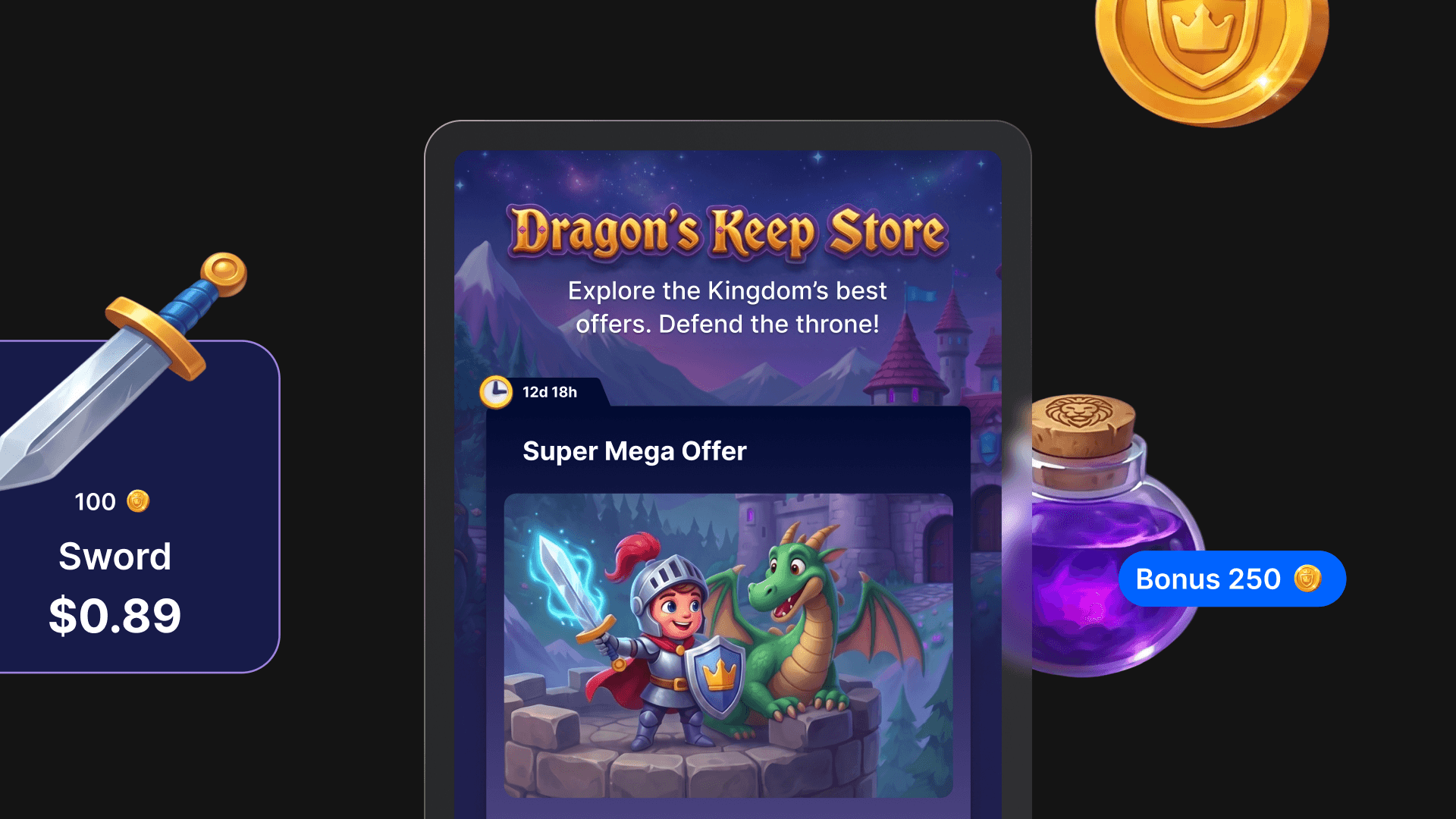
A mobile game webshop is a direct-to-consumer (D2C) storefront that allows developers to sell in-game items directly to players via the web. Unity IAP 5.4 now offers D2C support, enabling you to sell off-platform directly to your players alongside your existing IAP setup - including a free Unity-hosted webshop.
The business case for webshops can be compelling, but only if it’s well-built. A store that feels disconnected from the game, buries its value proposition, or gives players no reason to return will underperform regardless of the margin opportunity. Whether a webshop can work often comes down to a handful of decisions made at the build stage. This guide walks through how to get them right.
Key takeaways from this guide:
- Design for discoverability. Some studios default to low-visibility placement for their webshop out of caution about pushing spending before players have built the habit in-game. But players can't convert through a store they don't know exists. Build the entry point somewhere players will actually find it and make the value obvious. If a player has to work out for themselves that the webshop is the better deal, you may have already lost them.
- Build trust through familiarity. Players are leaving a known environment to make a purchase. Match the game's palette, assets, and UI patterns closely. If the transition feels like a different product you can lose spenders and undermine trust.
- Start with focused offerings. Use a simplified catalog to start. Hard currency first, then a few high-value bundles. A clean catalog with an obvious value proposition can convert better, particularly if players aren’t used to the webshop experience.
- Offer exclusives to create a destination. A discount gives players a reason to buy through the webshop but an exclusive gives them a reason to return.
- Motivate the habit to return. Daily rewards, loyalty points, and missions help to keep players returning. The goal is to turn a first-time shopper into a repeat customer.
1. Make discoverability a top priority
How prominently you can promote the web option relative to in-app purchase, and whether you can advertise a price advantage, is set by platform rules that differ by storefront and are actively changing. Those rules are currently more permissive in some markets than others, and they are the subject of ongoing litigation. Review the relevant policies to your webshop and market before proceeding.
When it comes to the entry point, many games' webshops are buried within the app, making discoverability an issue. The rationale is understandable: some developers have concerns that asking players to leave the app to complete a transaction can add friction and hurt conversion. While that thinking is valid, particularly for players who haven't yet developed an IAP habit, it comes with a significant trade-off in discoverability.
And if players can’t find a webshop or are unaware of it, they can’t convert through it. It’s often better to make your webshop easily discoverable and position it as another channel. Offset the friction of visiting the webshop by stating the explicit benefit for players and offering incentives.
Make it clear that players have the option to choose where they complete the transaction and ensure they know the trade-offs for each: IAP is immediate, but a webshop is often cheaper and offers exclusives.
How to do it:
- Display your webshop visibly so it’s easy to discover. Make it clear the player can choose where they’d prefer to complete the transaction.
- Offer players an incentive like a discount or bundle to complete purchases through the webshop. Put the value message at the top of the page, before the catalog, communicating that players receive more value by purchasing through the web so players know the benefits. The goal is to balance the friction of leaving the app with the added value of completing the transaction in the webshop.

2. Match the game’s visual identity and branding
The jump from app to browser can be a moment of friction. Players notice immediately when the visual experience changes and they're being asked to enter payment details on a site that isn't the App Store or Google Play. Trust counts for a lot in this moment: the more unfamiliar or lower-quality the experience feels, the more likely players may leave.
The best webshops minimize this friction by closely replicating the in-game look and feel: same color palette, character art, iconography, and UI patterns. The goal is for the webshop to feel like a natural extension of the game, not a separate product.
How to do it:
- Apply the game’s color palette to all backgrounds, buttons, headers, and cards.
- Create familiarity by exporting the character art, hero images, and iconography used in the in-game store and use the same assets in your webshop.
- Mirror in-game UI patterns. For example, if a game uses rounded cards with a specific border style, replicate that in the store layout.
- Check the game's default orientation. If it's landscape, your webshop should render in landscape on mobile. Small consistencies are what ensure the experience is seamless.

3. Start your webshop’s catalog with core game items
Not everything that sells in-game translates well to a webshop. The clearest webshop proposition to start with is hard currency, since it’s simple, universal, and easy to discount. High-value bundles also work well as a first or second webshop offering. Keep the initial catalog focused - a clean store converts better than a cluttered one.
One addition worth making from day one: a low-price entry item or starter pack that’s compelling enough for players to pay for. Players are handing payment details to a site that isn't the App Store or Google Play, and many may want to make a small purchase first.
How to do it:
- Start with hard currency packs or bundles. Avoid replicating the full in-game store on day one.
- If you add bundles, choose two or three high-value ones with obvious appeal.
- Include at least one low-price item so first-time buyers can test the store cheaply.
- Order your SKUs deliberately. Put your best-value option where the eye lands first, typically top-left or top-centre.
4. Offer webshop-exclusive items
Price alone isn’t always enough of a motivation to change behavior. Once your webshop is set up with your initial simplified offerings, it’s time to start thinking about webshop exclusives. Webshop-only items give players a reason to visit that goes beyond saving money, helping to turn the webshop into a destination rather than just a cheaper checkout counter. Purchasable items like cosmetics, limited-time content, and exclusive bundles create urgency and give community-minded players something to share.
How to do it:
- Identify one or two items, like a cosmetic, a character skin, a limited bundle, that you can hold back from the in-game store entirely.
- Label them clearly as webshop-exclusive. The exclusivity is the selling point, make sure players know it's not available anywhere else.
- Use limited-time windows on exclusive offers where possible. "Available until Sunday" typically converts better than “Available anytime.”
- Share exclusive offers through community channels like Discord, social, or email. Often players who feel like they're getting access to something others might miss are more likely to act.

5. Use player retention mechanics to build webshop habits
A player's first webshop visit is just the first step in building a relationship between them and your direct-to-consumer channel. Stores that generate meaningful revenue are often those where players return regularly, ideally as a habit rather than a one-off. The goal is to turn a first-time shopper into a repeat customer.
How to do it:
- Add a free daily reward claimable only through the webshop. It doesn't need to be high-value, even a small currency pack or consumable is enough. The purpose is to build the habit of returning to the store.
- Make the daily reward incrementally improve across a streak.This is the same mechanic that works to drive in-game daily logins.
- Use repeat-behavior incentives to build habits. Examples include loyalty point systems, where every purchase earns points redeemable for rewards, and easy directed tasks ("visit the store three days in a row") that reward completion, and teach players the store's mechanics while giving them reasons to return.
- On a player's first visit, prompt them to add the webshop to their home screen. This makes returns visits more easily accessible and positions your webshop as a normal part of their device and gaming experience.
- Treat your webshop as a community hub for your game. Create a space that players want to return to with unique game updates, community features, and guides. This is a longer-term goal that requires investment, but will likely drive more traffic and offer a better player experience.
Build your webshop with Unity
The practices in this guide work best when they're built in from the start. Unity’s webshop solution is designed with that in mind. Web-specific pricing, struck-through original prices, and Sale, Bonus, and Limited promotion badges are all supported out of the box, so the value players need to see is obvious.
Familiarity is handled at setup. Features like AI-prompted webshop design take your existing App Store or Google Play listing, screenshots, or uploaded art and produces a store that matches your game's visual identity, so the transition from app to browser doesn’t feel like a jump to a different experience
And if you're already using Unity IAP, the webshop doesn’t require any further integration. For Unity IAP users, the catalog you already have is the catalog Unity’s webshop reads from, using the same SDK and the same dashboard. Start with hard currency, add bundles when you're ready, and hold back the web-only items that give players a reason to return, all from the same place.
Best of all, outside of third-party payment processing fees set by the providers, Unity doesn’t charge any fees to create or operate your webshop. You’re not locked into one payment partner, and switching providers doesn’t require touching your catalog or any further integration. The goal is to remove as much of the build burden and cost as possible, so you can focus on the decisions that drive conversions and deliver a better experience for your players.