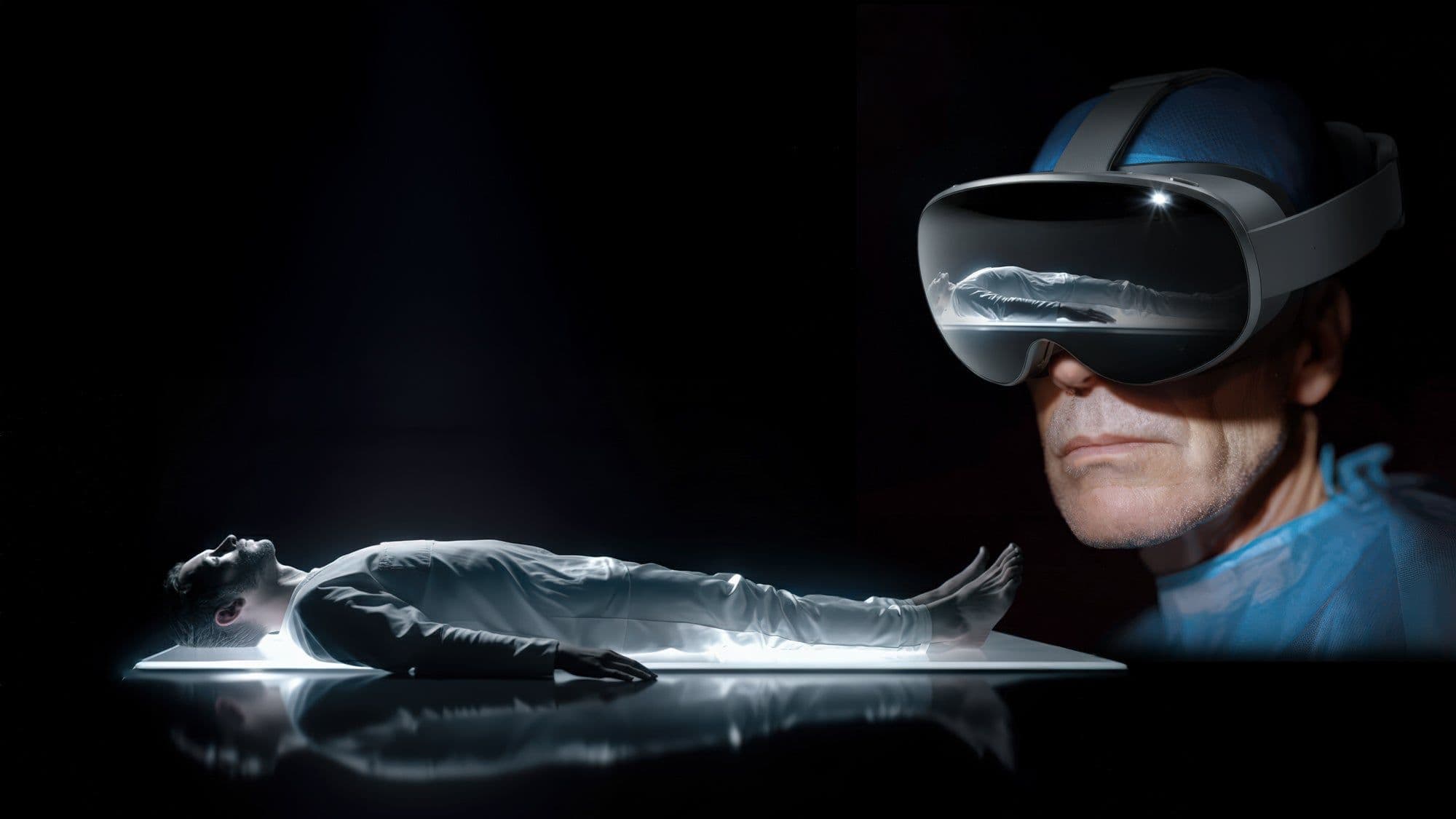
Confidence before clinical practice: How Labster is revolutionizing nurse training with VR
Overview
How Unity powers Labster to deliver clinically relevant, scalable, and immersive simulation experiences for nursing and STEM education.
Solutions
Labster virtual science labs and simulations, UbiSim immersive VR platform for nursing education. Unity products: Unity Engine, Unity Asset Manager.
Use case
VR-based nurse training, browser-based STEM simulation, and standardized 3D asset management to scale high-quality learning content.
Customer
Labster
UbiSim by Labster demo video courtesy Labster.
Scaling science and nursing education with immersive learning: A Unity case study
Empowering future-ready clinicians and STEM learners through VR and simulation.
Labster is a global leader in virtual science and healthcare education, providing immersive learning experiences that bridge the gap between theory and hands-on practice. Used by more than 6 million students across 3,000+ institutions in over 100 countries, Labster enables educators to improve outcomes, increase engagement, and expand access to high-quality STEM and nursing training - whether learners are in the classroom, at home, or in VR.
Built by nurses for nurse learners, UbiSim™, Labster’s immersive VR platform for nursing, helps institutions address clinical placement shortages and scale simulation training without additional lab space or faculty burden. Through realistic patient encounters, customizable scenarios, and evidence-based simulation design, UbiSim supports the development of clinical judgment, therapeutic communication, and confidence at the bedside.
Today, Labster is leveraging Unity’s real-time 3D technology to accelerate simulation development, deliver life-like clinical environments, and streamline 3D asset workflows - making high-quality learning experiences more affordable, scalable, and accessible worldwide.

UbiSim by Labster solution screenshot. Image courtesy Labster.
Proven impact at scale
UbiSim and Labster deliver measurable improvements in clinical readiness, training capacity, and learner confidence - backed by research and institutional outcomes.
- 57%+ improvement in clinical judgment using UbiSim vs. traditional methods
- 72%+ increase in psychological safety during VR prebriefing
- 94% of nursing students say UbiSim helped prepare them for clinical practice
- 90% report improved licensure readiness (NCLEX test scores)
- 82% of program directors say UbiSim helped attract more applicants
- 72% increased program capacity using VR simulation
- Up to 50% lower simulation costs vs. standardized patient labs
- 5–25% enrollment growth reported by institutions after adoption
- 32.2% reduction in mental-health stigma, 22.2% improvement in social attitudes
- Used in 300+ nursing institutions across 18+ countries

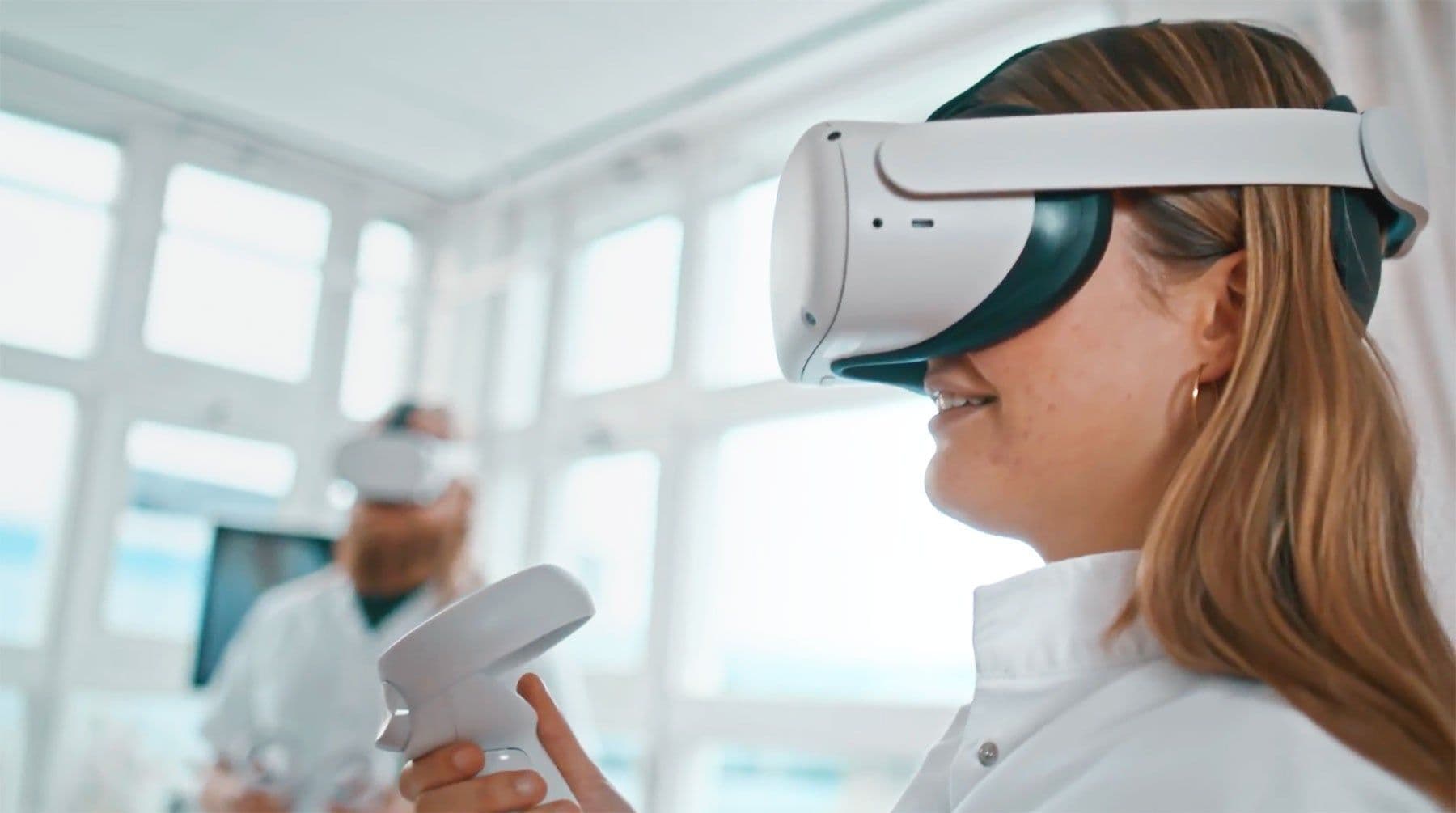
UbiSim by Labster in action. Nurses undergoing VR training. Image courtesy Labster.
Together, these outcomes reflect more than just efficiency; they represent more confident learners, stronger programs, and a future where every nurse can enter practice fully prepared to care with skill and compassion.
UbiSim has won several awards, including the 2024 EdTech Digest Cool Tool Award for VR/AR solutions, the EdTech Breakthrough Award for Career Prep Platform of the Year, and recognition as a TIME 2024 Best Invention.
Speaking of the benefits of the solution, James McCrary, Director of Innovative Teaching and Learning at River Parishes Community College in Louisiana said, “There's a novel effect to this type of technology. It’s to the benefit of the teaching faculty to harness that type of wonder and awe not just for our benefit, but to help those students and their careers.”
Read on to learn more about Labster and their innovative UbiSim solution, and the technology that powers it.

UbiSim by Labster in action. Nurses undergoing VR training. Image courtesy Labster.
The challenge: A readiness gap with real-world consequences
The healthcare industry faces a critical paradox: while 93% of nursing graduates pass their licensing exams, only 9% are ready for clinical practice on day one. This preparedness gap has real impact - more than half of nurses report involvement in medical errors early in their careers, and 83% of hospital leaders say new graduates lack clinical judgment experience. The issue isn’t capability - it’s exposure. Students are graduating without enough opportunities to make decisions, communicate with patients under pressure, or see deterioration unfold in real time.

UbiSim by Labster solution screenshot. Image courtesy Labster.
Historically, manikin-based simulation has helped bridge this gap, giving students a safe space to practice procedures like IV insertion, CPR, and medication administration. However, physical labs come with limitations: high equipment cost, limited space, intensive faculty setup time, and a lack of psychological realism. Manikins are invaluable for psychomotor skill development , but they cannot scale easily, nor do they replicate the emotional complexity of real patient care.
UbiSim doesn’t replace manikins, it complements them. Students may first learn a skill hands-on with a simulator, then step into VR to apply it in a lifelike scenario where a patient speaks, reacts, deteriorates, or stabilizes based on their decisions. This hybrid model preserves tactile learning while adding the immersive, repeatable practice that builds clinical judgment, confidence, and communication. With research showing UbiSim can improve clinical judgment by 57%, VR is emerging as a scalable solution to prepare nurses for the realities of practice - without expanding physical lab space or increasing preceptor burden.

UbiSim VR in action. Nurses undergoing training. Image courtesy Labster.
The solution: Immersive, scalable nurse training built for real clinical readiness
UbiSim is an immersive virtual reality simulation platform designed specifically for nursing education. Built by nurses for nurse learners, it places students inside lifelike clinical environments where they can assess virtual patients, practice decision-making, and build confidence through safe, repeatable scenarios. Rather than simply preparing students to pass exams, UbiSim helps them learn how to respond to real patients, real symptoms, and real pressure - from deteriorating vital signs to emotional conversations with families at the bedside.

UbiSim by Labster solution screenshot. Image courtesy Labster.
With customizable scenarios and a powerful web-based authoring tool, faculty can tailor simulations to align with curriculum, hospital protocols, or patient populations without writing code. Students can repeat scenarios as many times as needed, refine communication skills, recognize subtle clinical cues, and build the muscle memory that translates into confident practice. Programs of any size can train multiple learners simultaneously, without requiring additional lab space, equipment, or clinical placements.
UbiSim supports universities, colleges, and healthcare institutions around the world - from community colleges expanding enrollment capacity to teaching hospitals using VR for residency programs and onboarding. Today, more than 300 institutions across 18 countries use UbiSim to scale simulation training, strengthen clinical judgment, and prepare nurses to deliver safe, compassionate care from day one.

UbiSim solution screenshot. Image courtesy Labster.
Unity as the foundation for scalable, immersive clinical and STEM simulation
Behind Labster and UbiSim’s ability to deliver lifelike nursing scenarios and browser-based STEM experiences is a robust development stack built on Unity’s real-time 3D platform. With Unity as the core engine powering VR, WebGL, and mobile deployment, Labster can create highly realistic, curriculum-aligned simulations that scale globally without the infrastructure burden of physical labs or proprietary engine development.
Unity provides the flexibility needed to prototype rapidly, reuse interaction systems across products, and maintain one shared codebase for VR, web, and mobile. This allows development teams to focus on pedagogy, scenario quality, and clinical accuracy rather than engine maintenance - accelerating build cycles and enabling faster delivery of new content to educators and institutions worldwide.

UbiSim solution screenshot. Image courtesy Labster.
How Unity powers the Labster & UbiSim simulation ecosystem
VR-ready interaction for clinical realism
Unity’s XR Interaction Toolkit and prefab workflows enable believable patient care activities - from medication administration and vitals assessment to emergency decision-making - with intuitive, hands-on interaction in-headset.
Visual fidelity and comfort in immersive environments
Universal Render Pipeline (URP) and Shader Graph allow the team to optimize performance for VR while maintaining clarity of clinical cues, lighting, and materials necessary for accurate scenario perception.
Cross-platform delivery from a single codebase
UbiSim deploys to standalone VR headsets, while Labster simulations run in browser via WebGL and scale to mobile using IL2CPP, all built and maintained within one development pipeline.
Efficient content creation and modular development
Unity Package Manager supports reusable interaction modules, assessment logic, UI systems, and device profiles, allowing new simulations to be spun up in hours rather than weeks.
Asset streaming and reuse at scale
Addressable Assets enable large 3D models to stream on demand, reduce build size, and support reuse across hundreds of labs and nursing scenarios - an early step reinforced further by Unity Asset Manager.
Accelerated simulation authoring for STEM at scale
The same Unity toolchain powers Labster’s science catalog, allowing teams to ship more content faster while maintaining consistency in UX, mechanics, and asset quality across disciplines.
With Unity at the core, Labster can move quickly from concept to deployment, maintain visual and clinical accuracy across platforms, and deliver immersive learning that scales from a single headset to global rollout. Unity enables the team to iterate fast, teach confidently, and continuously expand the content library that prepares future nurses and STEM learners for the real world.

UbiSim by Labster VR in action. Nurses undergoing training. Image courtesy Labster.
Scaling content efficiently with Unity Asset Manager
As Labster’s catalog of virtual science simulations expanded, alongside UbiSim’s growing library of clinical VR scenarios, the demand for more structured asset workflows became increasingly urgent. Assets were stored across Git LFS, Google Drive folders, and spreadsheets, leading to duplicated models, inconsistent naming conventions, and difficulty locating the right version when building new training content. Teams frequently rebuilt assets they couldn’t find or trust, slowing production and increasing costs.
Unity Asset Manager (UAM) is changing that.
Now implemented across the Labster product line - and in plan for UbiSim - UAM serves as a centralized source of truth for all 3D assets. Artists and developers upload QA-approved content once, where it becomes discoverable, version-controlled, and ready for use across any Unity project. This single ecosystem eliminates asset hunting, improves traceability, and ensures that simulations are built from the most current and validated resources.

UbiSim by Labster VR in action. Nurses undergoing training. Image courtesy Labster.
“Before UAM, discovery and reuse were our biggest friction points. Now teams can search, preview, and import assets directly into Unity; and build faster because of it.”

UbiSim - Labster
Tech team
UAM manages the full asset lifecycle end-to-end: intake, review, metadata tagging, versioning, transformation (including LOD/variant generation), and distribution - reducing manual steps while improving governance. With improved taxonomy, structured metadata, and Jira integration to automate approvals, Labster has greater visibility into where assets are used and which teams rely on them, preventing duplication and accelerating delivery of new simulations.

UbiSim by Labster VR in action. Nurses undergoing training. Image courtesy Labster.
Immediate benefits gained with Unity Asset Manager:
- Faster discovery and reuse of 3D assets
- Reduced production cost per simulation
- Scalable asset pipeline with no increase in manual overhead
Though early in adoption, Unity Asset Manager is already streamlining collaboration between engineering, art, and curriculum design teams. Asset discovery time has significantly improved, encouraging reuse and directly reducing production cost per simulation. As Labster and UbiSim continue to scale, UAM ensures their growing content pipeline can expand without a proportional increase in workload, a critical advantage as demand for simulation accelerates globally.
With Unity Asset Manager, Labster is building a scalable content foundation - one that supports faster authoring, less rework, and the efficient creation of high-quality simulations for learners and nursing programs worldwide.

UbiSim by Labster VR in action. Nurses undergoing training. Image courtesy Labster.
Impact: Preparing confident clinicians and enabling institutions to grow
UbiSim adoption continues to scale globally, now supporting 300+ nursing institutions across 18 countries, from rural colleges training local clinicians to national university systems expanding cohort capacity. Programs like REACHvr at the University at Buffalo leverage VR to prepare students for underserved environments, while large-scale deployments such as HCT in the Philippines train tens of thousands of learners annually, demonstrating how VR removes barriers tied to geography, clinical placements, and lab space.
By shifting simulation into an immersive, repeatable format, UbiSim helps institutions break the long-standing tradeoff between enrollment growth and training quality. Hospitals benefit as well; graduates arrive more confident, require less onboarding support, and demonstrate stronger clinical judgment from day one.
“Some of the scenarios we have in UbiSim help them prepare for clinical patient deterioration and figure out ‘what do I do?’ That's helpful for them to work through the emergency situations they’re nervous about and really decreases their anxiety.”

Arjuna Jacob - NYU Langone Hospital - Tisch/Kimme
MS, RN, NPD-BC, Nursing Professional Development Specialist
This testimonial is courtesy Labster and first appeared in their NYU Langone case study.
Most importantly, students feel the difference. Learners using UbiSim report higher confidence, improved communication, and greater readiness for real patient care. Instead of hoping to encounter critical cases during rotations, students can practice them repeatedly - transforming anxiety into competence and building the kind of instinctive clinical judgment that strengthens the workforce long term.
“The simulations we use most focus on pediatrics, blood transfusion, and mental health. Students get to practice these scenarios in a safe environment, building confidence before going into real clinical settings.”

Lorelei Janzen - University of the Fraser Valley
RN, BScN, MN, Associate Professor of Nursing
This testimonial is courtesy Labster and first appeared in their Fraser Valley case study.

UbiSim by Labster in action. Nurses undergoing training. Image courtesy Labster.
A future built on scale, intelligence, and immersion
The next evolution of Labster and UbiSim goes beyond replicating clinical practice - it amplifies it. As Unity’s WebGPU support matures, Labster is preparing for a new generation of browser-based simulation where richer materials, clearer visual cues, and smoother performance make immersive learning accessible anywhere, without specialized hardware. VR will continue to drive realism, while the web becomes an increasingly powerful doorway for global reach.
At the same time, authoring is getting smarter. Unity’s editor-time AI capabilities are poised to accelerate content creation by automating repetitive setup and guiding designers toward best practices, recommending metadata structures, Addressables mappings, Shader Graph patterns, UI scaffolds, and more. By integrating intelligence directly into internal UPM packages and validation pipelines, good defaults will become automatic, freeing creators to focus on pedagogy, storytelling, and the clinical nuance that truly shapes confident practitioners.
Labster’s aim is bold yet simple: a world where every learner, everywhere, can step into immersive science and healthcare training with ease, and where new simulations can be built faster, richer, and at scale. With Unity as the engine powering that future, Labster is not just responding to the needs of modern education; it’s helping define what the future of learning looks like.
More from Unity