

Push the limits of your creativity
Bring the industry’s first and fastest unbiased, physically accurate GPU-accelerated renderer to your Unity workflow with complex materials, ultra-fast AI denoising, and upcoming NVIDIA RTX support.
Scalable solutions for your 3D creation pipeline
Create immersive experiences with OctaneRender®
Speed
Attain GPU-accelerated batch rendering with massive 10-100x speed gains in the scene graph.
Quality
Achieve new levels of realism with unbiased and physically accurate rendering.
Flexibility
Get plug-in support for 25+ digital content creation tools.
Path-tracing
Use path-traced rendering to create high-resolution virtual reality and augmented reality.
Dynamic Viewport
The OctaneRender viewport is fully integrated into Timeline for real-time 3D editing.
OctaneRender Materials
Custom materials are available in-engine.
Compositing Workflow
Separate renders into multiple layers and passes for compositing.
OctaneRender Imager
In-render color correction and custom LUTs give you granular image and color control.
Post-processing
Create in-render 2D effects enhancements like glare, bloom, and spectral intensity.
Integrated Stereo Rendering Options
Create panoramic, side-by-side, anaglyphic, and over-under renders in Unity.
OctaneRender® key benefits
OctaneRender Recorder
Create and record animations and sequences from Timeline as either a movie file or an ORBX package that can be rendered through OctaneRender Cloud® at the Studio and Creator levels.
PBR Viewport
See the quality of cinematic output you will get with the final render dynamically as you work on your scene.
Node Editor
Access VFX-quality shading and lighting in Unity with the OctaneRender visual node-based workflow.
Complex Layered Materials
With unique layered materials, OctaneRender empowers you to recreate complex materials in a physically based manner as opposed to manually mixing materials together.
Vectron and Spectron Procedural Geometry and Lighting
Create infinite procedurally generated scenes, volumes, and geometry as well as procedurally driven volumetric lighting with the new OctaneRender Vectron™ and Spectron™ features.
OctaneRender Cameras
Get access to additional camera types and cinematic post-processing effects in Octane Render for Unity.
ORBX
Unity can now read OTOY’s ORBX® file format, a 3D interchange format that includes materials and shaders in addition to geometry, which is already compatible with 25+ digital content creation tools.
FBX Compatibility
Convert ORBX® files to FBX for a familiar, easy-to-use workflow.
Ecosystem
Studio and Creator packages include OctaneRender for After Effects and OctaneRender for Nuke and unlock access to plug-ins for 25+ digital content creation tools, such as Cinema 4D, Maya, or Houdini.
Resources
Installation and project-based guides
To get started, check out the Installation Guide and the Introduction to OctaneRender for Unity tutorial.
More about OctaneRender for Unity
Get additional resources and information, such as the OctaneRender for Unity roadmap.
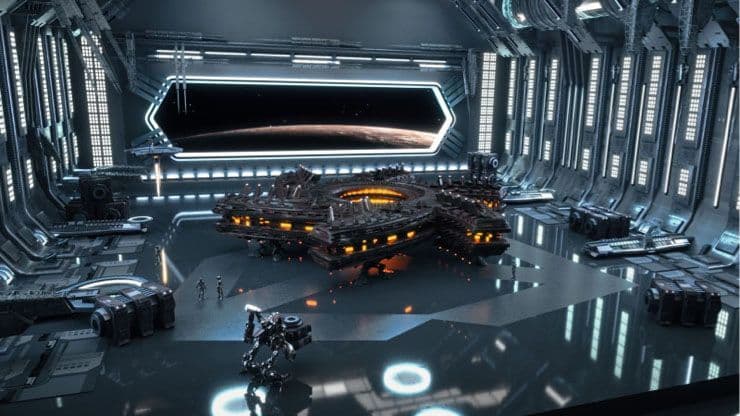
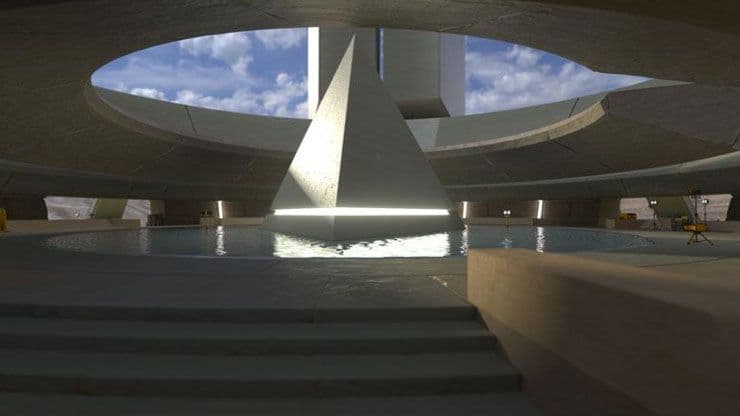
Explore creative possibilities with OctaneRender sample scenes

Yes. You can increase the number of seats by purchasing through one Unity account, and assigning seats to other intended users. You can assign seats on the “Configure Your Plan” page on the storefront. Just select the users you want to add and enter their Unity account information.
Shortly after your purchase, you will receive an email from Unity Technologies that contains a link to download the OctaneRender plug-in. Click “Download OctaneRender for Unity Installer Scene” within the email to go to the Unity Asset Store. You can download OctaneRender for Unity on that page.
Render speed scales linearly with additional GPUs. Visit the OctaneBench page for a list of GPU performance benchmark results for OctaneRender compatible graphics cards.
Please note the number of concurrent GPUs that are allowed at each license level:
- Prime: 1 GPU
- Studio: 2 GPUs
- Creator: 20 GPUs
You can switch selected plug-ins on a monthly basis through the OctaneRender account portal.
Load your scene in the Unity Editor. Once loaded, you will be prompted to accept an account bridge to link to your Unity account, which will install OctaneRender.
You can explore OctaneBench to get a sense for various GPU performances. OctaneRender requires CUDA cards, and effectively works as far back as the GeForce GTX 970s. You can find a list of hardware suggestions based around different uses of OctaneRender here.
To see your scene in OctaneRender, select PBR Render Target and then hit render. That will open the PBR Viewport and you can see the PBR textures. It’ll take a minute to compile but once it does so, you can move around the scene easily.
The minimum commitment period is an annual term, billed monthly at $20 per month for OctaneRender Studio and $60 per month for OctaneRender Creator.
OctaneRender for Unity is available for Unity 2017.1 and newer.
Studio and Creator both ship with OctaneRender for Nuke and OctaneRender for After Effects. With OctaneRender Studio, you can also choose 1 additional plugin, and with OctaneRender Creator, you can choose up to 3. There are 25+ authoring tools supported by Octane including C4D, 3ds Max, Maya and more. You may also select OctaneRender Cloud.
At the moment, OctaneRender requires NVIDIA technology to run. However, Octane X™ will be built from the ground up on Metal for next-generation MacPro, MacOS, and iOS. A demo of Octane X was presented at WWDC 2019. You can read more here.
The OctaneRender Lightmapper is supported for static lightmap baking.
Not yet. Today, OctaneRender can upgrade the quality of environments and objects; however, real-time rendering in Play or Game Mode still relies on Unity’s renderer. OTOY’s real-time path-tracing engine Brigade will be integrated into Octane, resulting in a vast improvement both in scene load times and dynamic, real-time, path-traced rendering.
Partially. The OctaneRender Recorder lets you save batch renders from Play Mode, allowing you to compile multiple timelines into one sequence. However, it is not yet possible to play through the game and record a session smoothly. The speed of this process can be dramatically increased by increasing the number of GPUs with Creator’s 20 GPU limit.
Yes. OctaneRender is a path-traced render engine. It is possible to render individual frames from Timeline generated with Cinemachine, and now Play Mode can support multi-timeline sequences being rendered by OctaneRender in one batch.
You own your content!
Please see our OctaneRender Cloud support page for information about creating an account and getting started uploading renders to ORC.