XR for aviation: How NMY uses Unity Industry to provide up to 20,000 training sessions a year to Lufthansa staff

Shanti Zachariah - Unity Technologies
Senior content marketing manager
Overview
Frankfurt-based NMY Mixed-Reality has transformed employee training for one of the biggest airlines in the world, Lufthansa Group.
Use case
NMY uses Unity Industry to develop, deploy, and upgrade an ecosystem of mandatory immersive training courses, compliant with strict industry regulations, for different employee roles at Lufthansa.
Solutions
The applications are built on Unity Industry, including OpenXR Plugin, XR Interaction Toolkit, XR Hands package, Unity Physics, UI Toolkit, rendering pipelines, the Data-Oriented Technology Stack (DOTS), Burst compiler, job system, and Addressables.
Customer
NMY Mixed-Reality develops custom spatial computing and 3D experiences for globally-deployed enterprise learning, onboarding, and product communication.
Frankfurt-based NMY Mixed-Reality has transformed employee training for one of the biggest airlines in the world, Lufthansa Group. Their XR ecosystem of highly effective, regulatory-compliant training modules show the scaling power of real-time 3D with Unity Industry: A relatively lean team of 15-20 highly skilled developers, artists, and instructors can create, deploy, and update a fully immersive learning curriculum that trains tens of thousands of Lufthansa employees a year.
Key takeaways
NMY’s XR training results:
- NMY serves as the strategic IT framework partner for the Lufthansa Group, developing and managing their comprehensive, group-wide XR and 3D ecosystem since 2016.
- According to Lufthansa Group, they have achieved:
- Over 75% savings on operational training costs by eliminating physical mock-ups, according to Björn Eckermann, a specialist in XR training technologies at Lufthansa Aviation Training Germany GmbH
- 80% savings specifically on trainer travel costs by enabling instructors to guide and evaluate trainees remotely, according to Momo Ruzic, Head of Aircraft Handling FRA , Lufthansa Cargo
- NMY uses Unity Industry to develop, deploy, and upgrade an ecosystem of mandatory immersive training courses, compliant with strict industry regulations, for different employee roles at Lufthansa.
- The system evaluates examinations automatically and synchronizes passed licenses in real-time with Lufthansa’s corporate learning management system (LMS) and rostering system.
- 20,000 automated mandatory training sessions are completed a year on NMY’s made-with-Unity Industry applications.
How NMY uses Unity Industry:
- Unity’s multiplatform pipeline enables NMY to target high-end standalone and PCVR, and mobile and desktop devices.
- A robust XR stack including OpenXR Plugin, XR Interaction Toolkit, and the XR Hands package power intuitive and natural user experiences in XR
- Seamless linking of Unity client applications to NMY’s proprietary "NMY System Operator" dashboard, allows instructors to monitor live video feeds, inject real-time stress hazards (like smoke or system failures), and evaluate trainees remotely.
- Integrating custom APIs into Unity enables NMY’s platform to communicate pass/fail exam data directly into client Learning Management Systems (LMS) and HR databases without manual intervention.
- Core developer and creator toolsets:
- Physics, UI Toolkit, rendering pipelines, custom shader, lighting tools
- Data-Oriented Technology Stack (DOTS), Burst compiler, and the job system
- Unity Package Manager (UPM) to modularize and standardize their code base
- Addressables
“Unity [Industry] has been our trusted companion since day one. Its highly modular architecture allows us to build not just apps, but LBA-certified (German Federal Aviation Office) XR ecosystems at scale.”

Sebastian Demmerle - NMY Mixed-Reality
CEO
Virtual training works better by providing immersive storytelling, gamification, and muscle memory
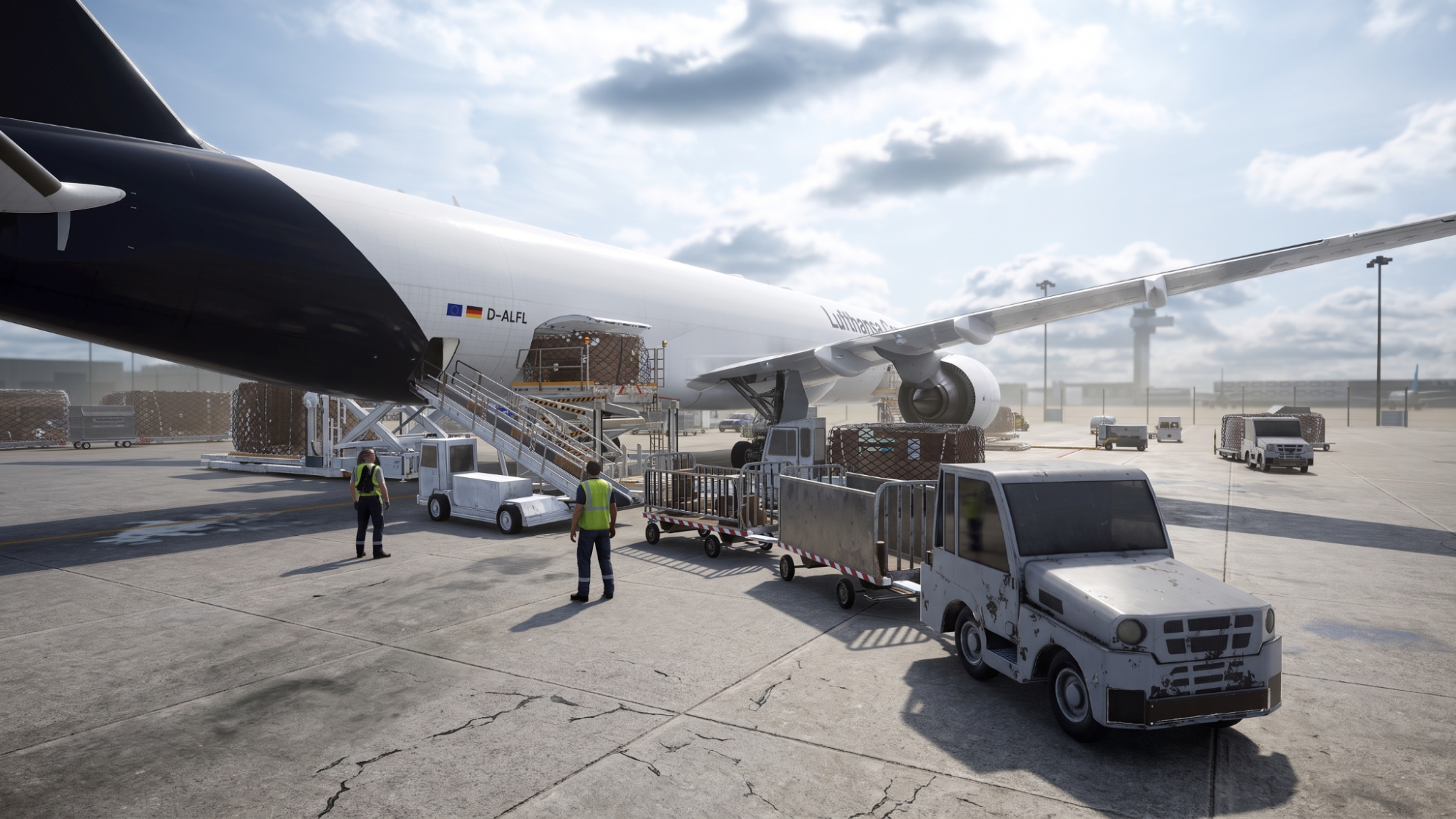
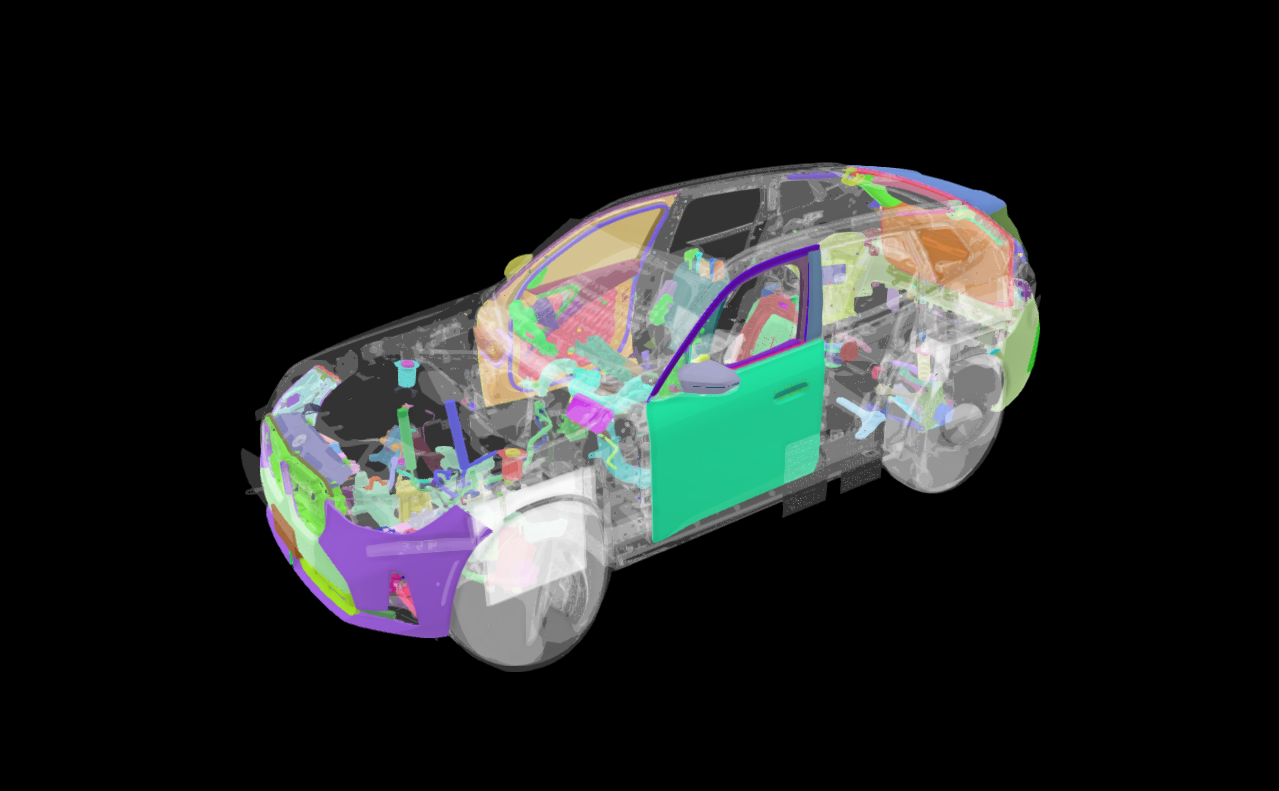
A digital twin of a Lufthansa Group aircraft and ground crew vehicles
For over 20 years, NMY Mixed-Reality has been developing custom spatial computing and 3D experiences – VR, AR, and AI – for globally-deployed enterprise learning, onboarding, and product communication.
Using their deep digital twin expertise and Unity Industry they create physically exact, high-performance immersive experiences, including training and onboarding courses, and 3D sales and showroom experiences. Their applications feature game-based simulations, natural user experiences (UX), high-fidelity graphics, and rich storytelling, and are deployed to standalone VR headsets, mobile tablets, and web browsers.
NMY counts global market leaders in aviation, healthcare, and the industrial sector among their customers. This case study explores their partnership with Lufthansa Group, focusing on the XR training ecosystem they developed with Unity Industry, and which provides a clear and compelling demonstration of NMY’s XR-driven enterprise expertise.
“Unity empowers us to maintain a robust and flexible platform that slashes development times and delivers exponential ROI for global industrial leaders.”
Sebastian Demmerle - NMY Mixed-Reality
CEO
No one flies without mandatory, regulatory-compliant training
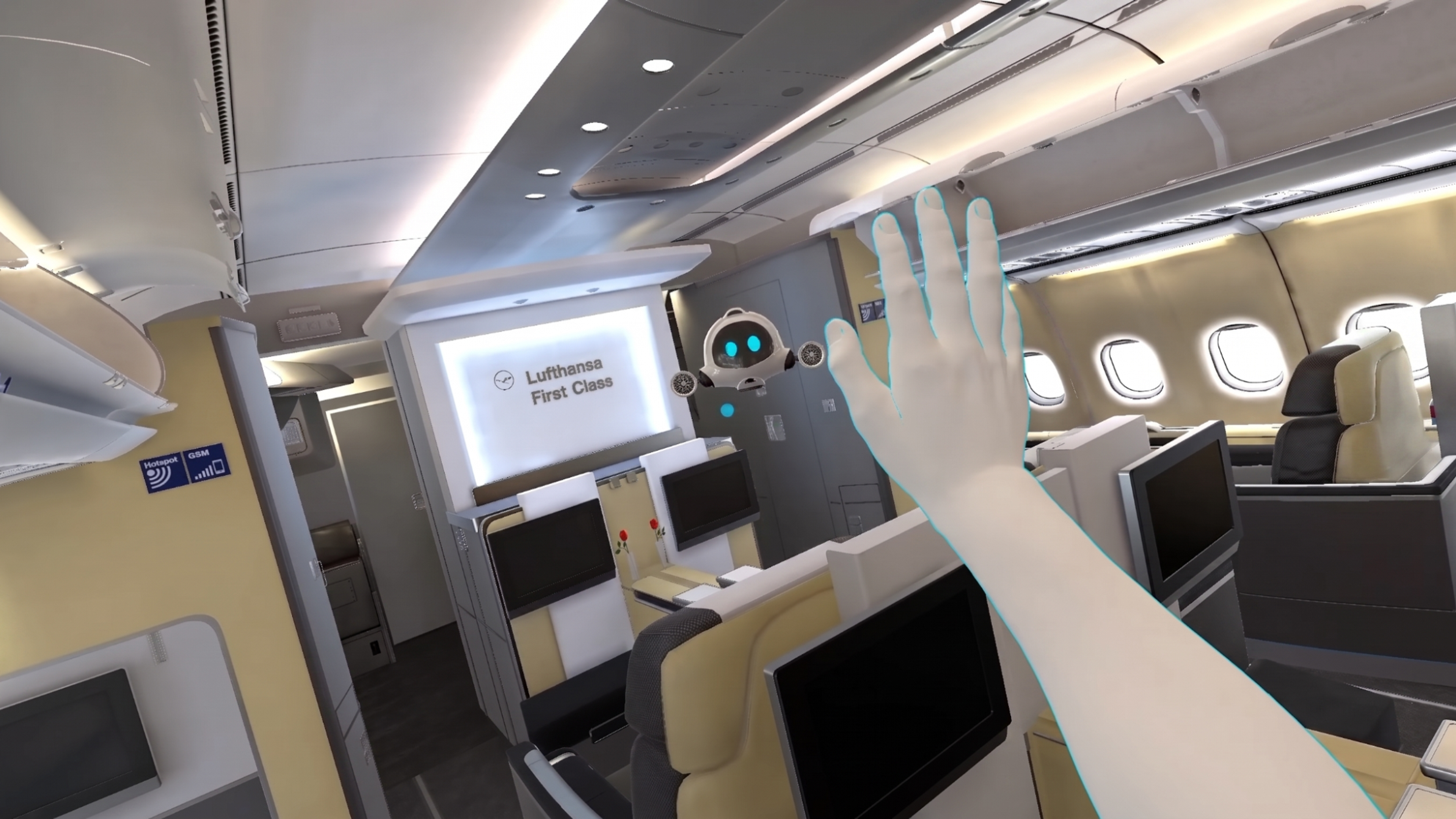
Inside one of the XR applications that trains cabin crew in aircraft security searches
Lufthansa Group employs over 100,000 people globally and has ambitious targets for maximum safety and operational excellence:
- Employees across diverse, safety-critical roles – cockpit and cabin crews, cargo logistics, ground handling – must complete mandatory safety, security, and operational training.
- Training is strictly monitored by aviation authorities like the German Federal Aviation Office (LBA).
- There is no "license to operate" without training; the rostering system blocks individuals without the requisite training credentials from operational duty.
An outdated framework that caused massive bottlenecks
Traditional training and education methods could no longer scale to meet Lufthansa Group’s operational demands or its digitization strategy.
The corporation relied on centralized, physical training centers and fragmented software solutions, an analog model that caused them four bottlenecks:
- Space-intensive hardware: Authentic cabin mock-ups, door trainers, and full-flight simulators cost millions, consumed thousands of square meters of hall space, and required constant, expensive physical updates.
- Downtime of productive assets: Real aircraft and expensive apron equipment (an airport apron is the paved area where aircraft are parked for service, loading and unloading, and refueling) was taken out of operational service for training, blocking revenue-generating assets.
- Global travel time: Thousands of crew members and technicians had to travel globally, generating considerable flight and hotel costs and employed downtime during transit.
- Trainer bottlenecks: Qualified instructors were bound to physical locations where they were able to train only small groups.
Lufthansa's goal was clear: Transform its educational landscape to save costs, optimize resource allocation, and increase learning effectiveness.
NMY’s unified XR ecosystem changes everything
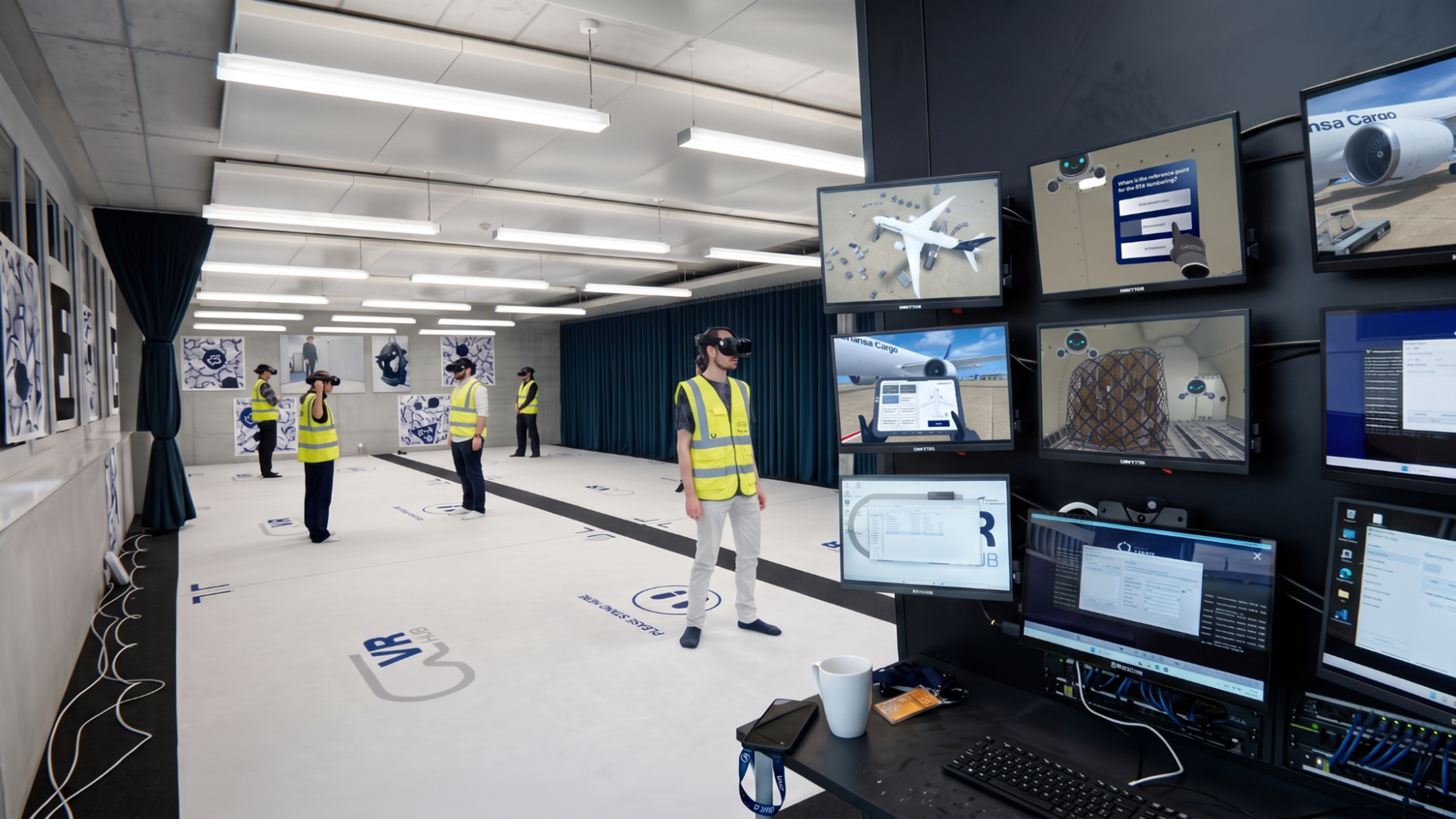
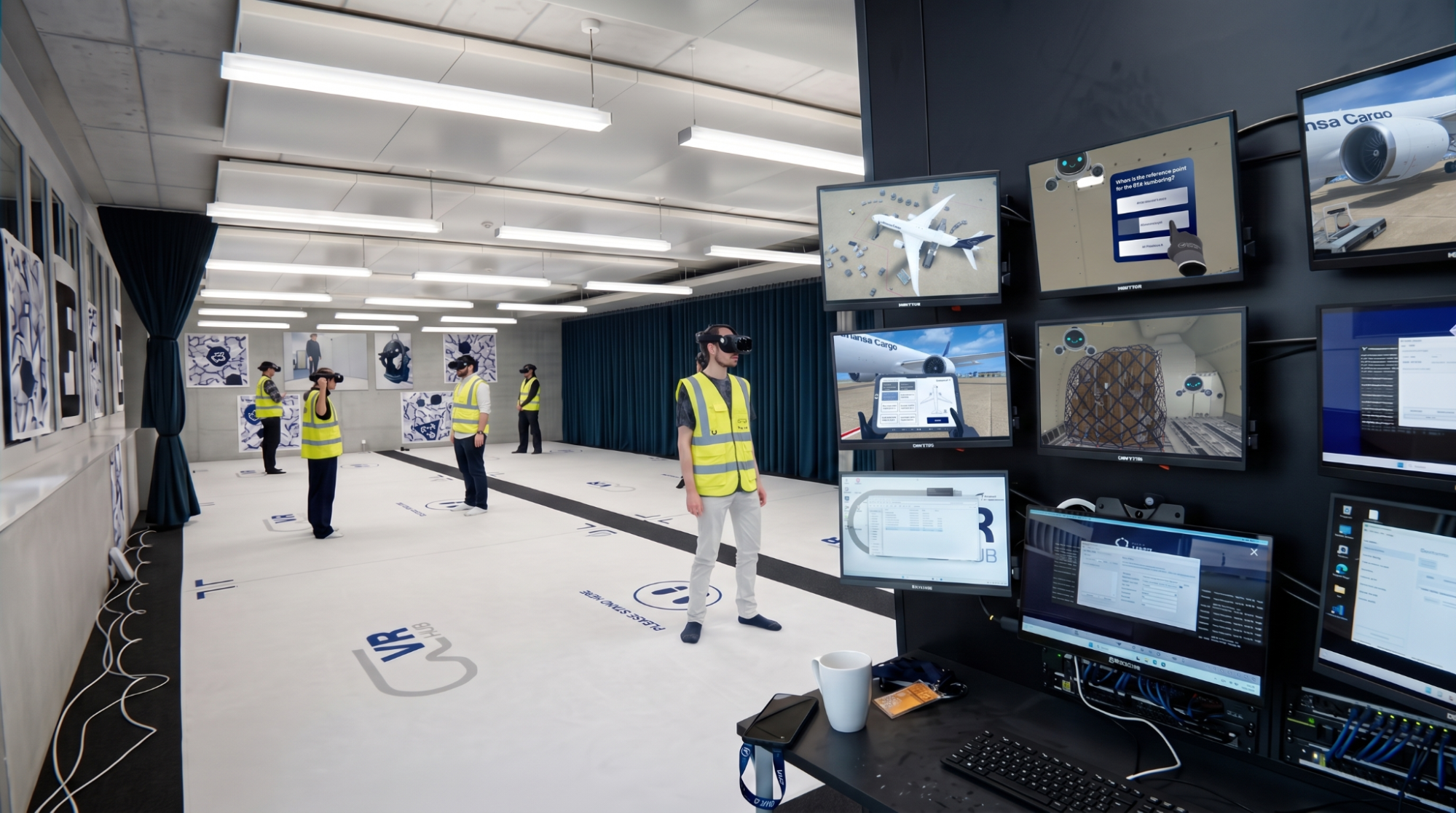
Ground crew employees who handle cargo participate in a VR training session at one of Lufthansa’s global training hubs.
Lufthansa Group turned to NMY Mixed-Reality to spearhead this transformation. NMY’s flagship XR software, developed with Unity Industry, includes its Aircraft Security training and Cargo Ramp Agent vocational training. These applications replaced many of the old analog methods.
How training works: XR Hubs for employees, 100% remote for trainers
- For employees: The training takes place in four XR hubs in Brussels, Frankfurt, Munich, and Zurich. Employees now only need to commute locally or regionally to their nearest hub (e.g., a Swiss employee goes to Zurich, a Belgian to Brussels). This alone significantly reduces global trainee travel.
- For the instructors: They work remotely via the NMY System Operator.
- Previously, a senior instructor had to fly from headquarters to Brussels or Zurich, book a hotel, and lose two days of productivity just to conduct a two-hour exam.
- Now, they work from HQ (e.g., Frankfurt) and use the NMY System Operator (via a tablet or desktop dashboard). When the trainee puts on the headset in Brussels, the instructor 'dials in' remotely. They can see exactly what the trainee sees, evaluate the exam in real-time, and trigger live stress scenarios (like smoke or technical errors) at the push of a button.
This is where the aforementioned 80% savings in trainer travel costs comes from: the elimination of the many flights, hotel bookings, and hours in transit time previously required for trainers.
“Our XR ecosystem is highly scalable, secure, and unified, enabling Lufthansa Group to manage its massive qualification volume efficiently across all its subsidiaries, without compromising the rigorous standards of aviation safety,” says Sebastian Demmerle, CEO of NMY.
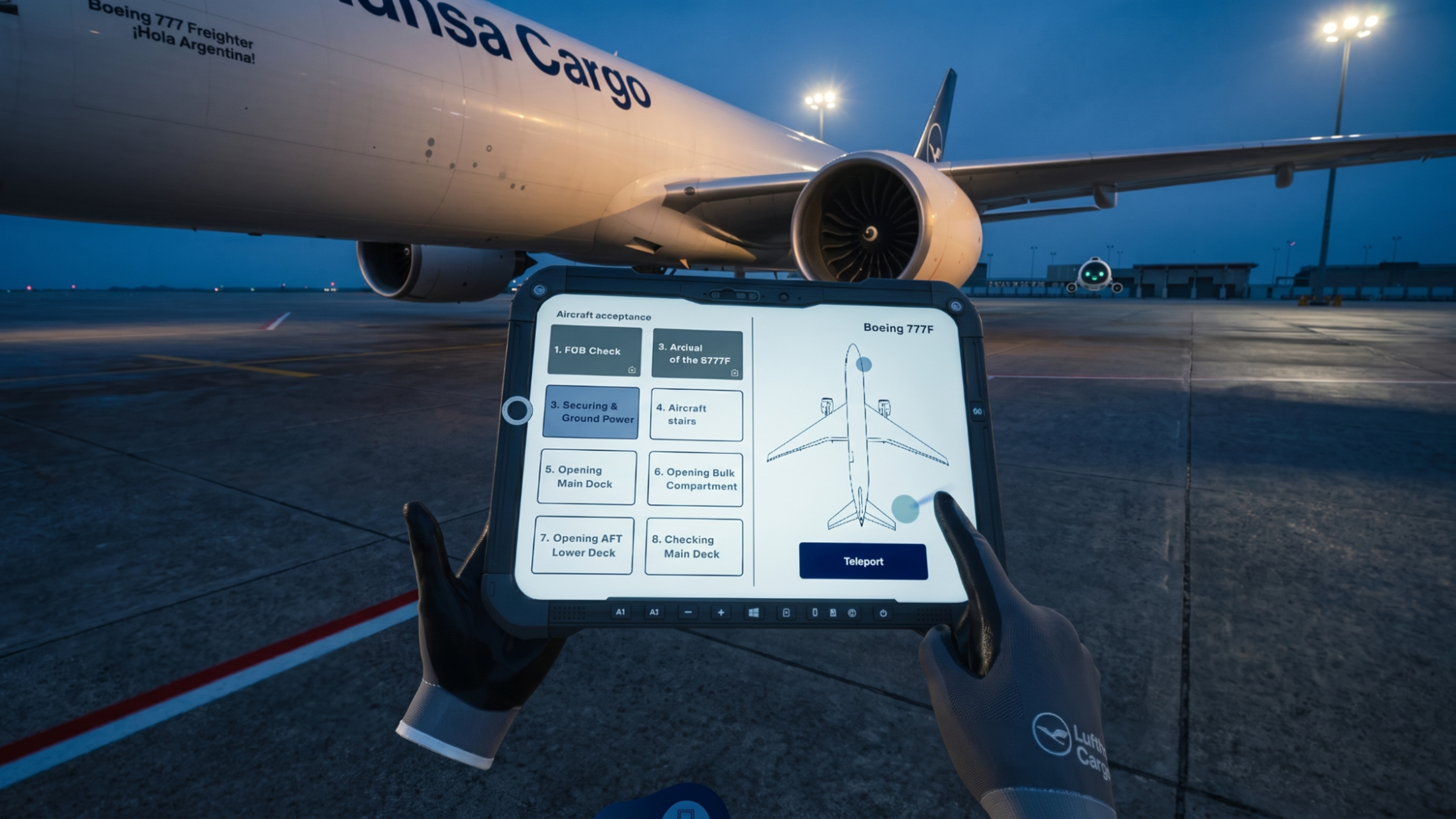
A scene from the cargo training application
“XR is the decisive technological lever to reduce real operational errors by up to 50%, delivering a resource-saving, sustainable training program that ensures excellent quality standards worldwide.”

Momo Ruzic - Lufthansa Group
Head of Aircraft Handling FRA , Lufthansa Cargo
Top-tier instruction for inside and outside the aircraft
NMY’s XR solutions deliver a combined 20,000 mandatory training examinations for Lufthansa Group per year, in continuous operation. The training is tailored to meet the needs of three distinct user groups:
- Flight staff, including cabin crews and pilots:
- 20,000 flight attendants and pilots per year use the XR ecosystem for their legally mandated "Safety and Emergency Procedure" (SEP) and "Regular Recurrent Training".
- Trainees practice critical aircraft security searches and emergency protocols in a highly realistic virtual cabin.
- They also get training in soft skills for passenger interaction, including de-escalation, as well as premium hospitality training (cabin workflow and service standards).
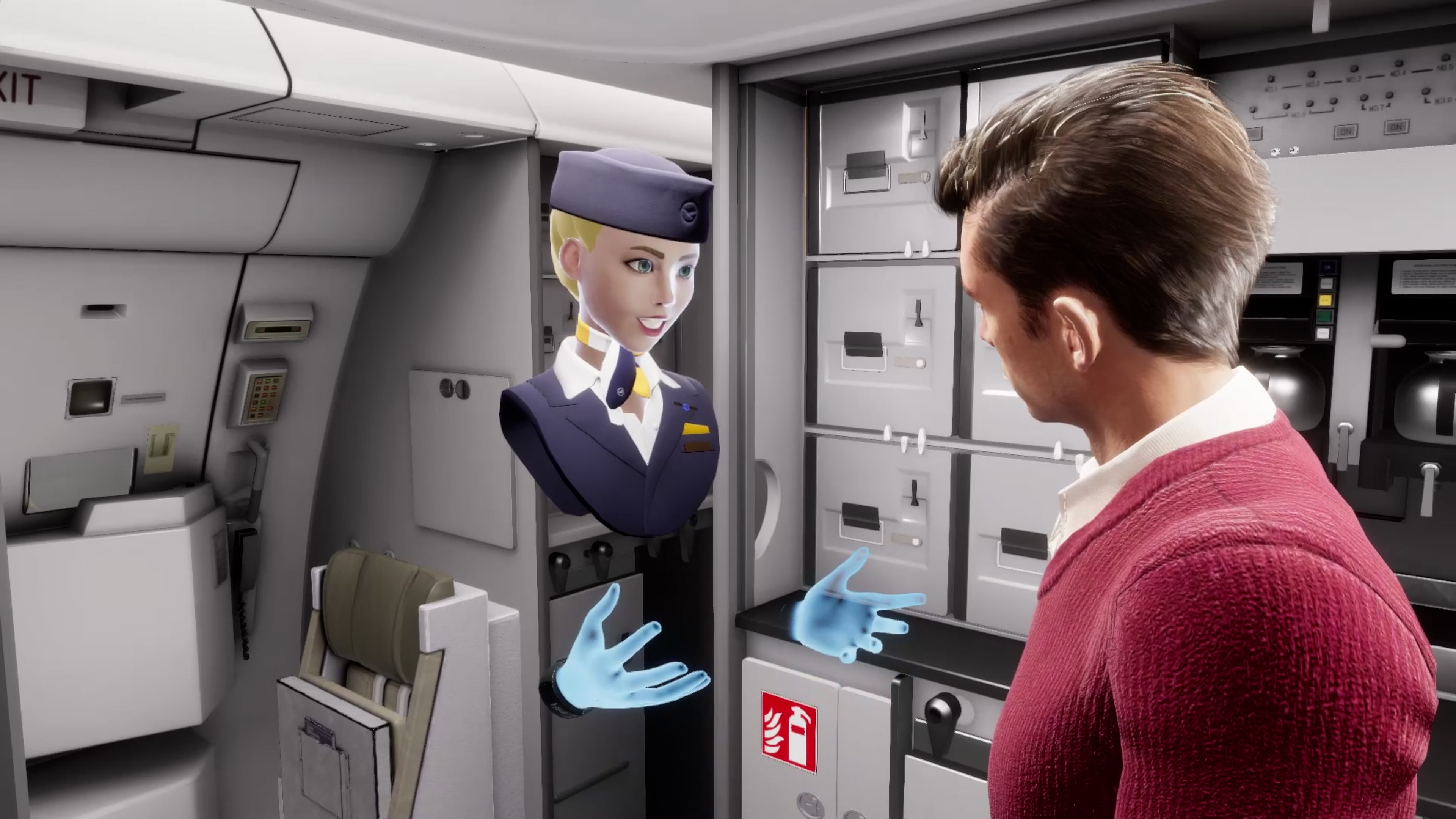
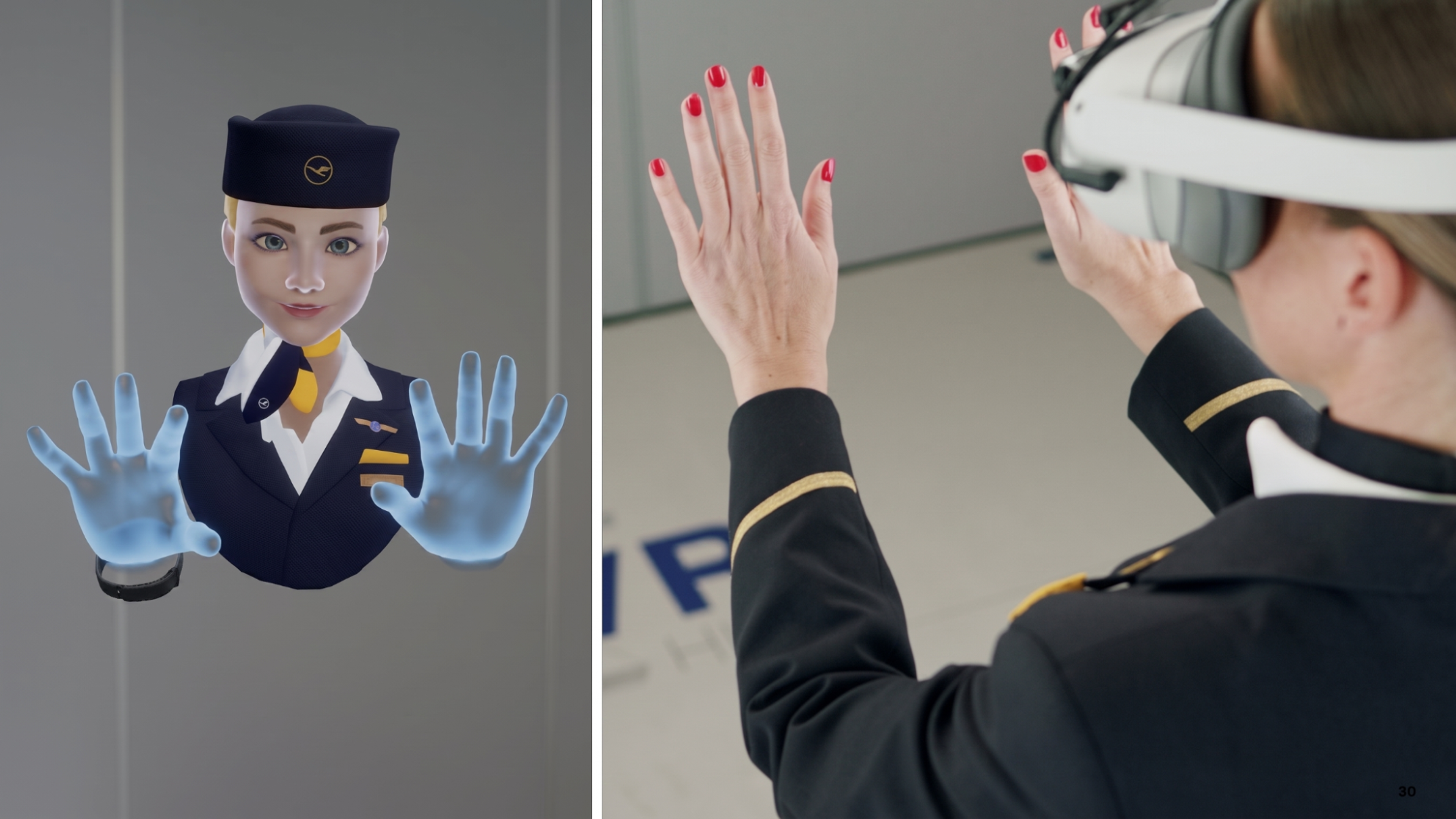
Above and below images: Inside an XR training experience instructing cabin crew in communication skills
2. Ground personnel and technical maintenance, including aircraft maintenance technicians:
- Ramp agents use the Lufthansa Cargo Ramp Agents application for training in loading/unloading cargo, balancing loads, handling heavy ground support equipment (high-loaders, tugs), and managing hazardous materials logistics directly on cargo aircraft.
- Engineering personnel explore complex aircraft components and practice intricate engine maintenance tasks safely before executing them on real multimillion dollar engines.
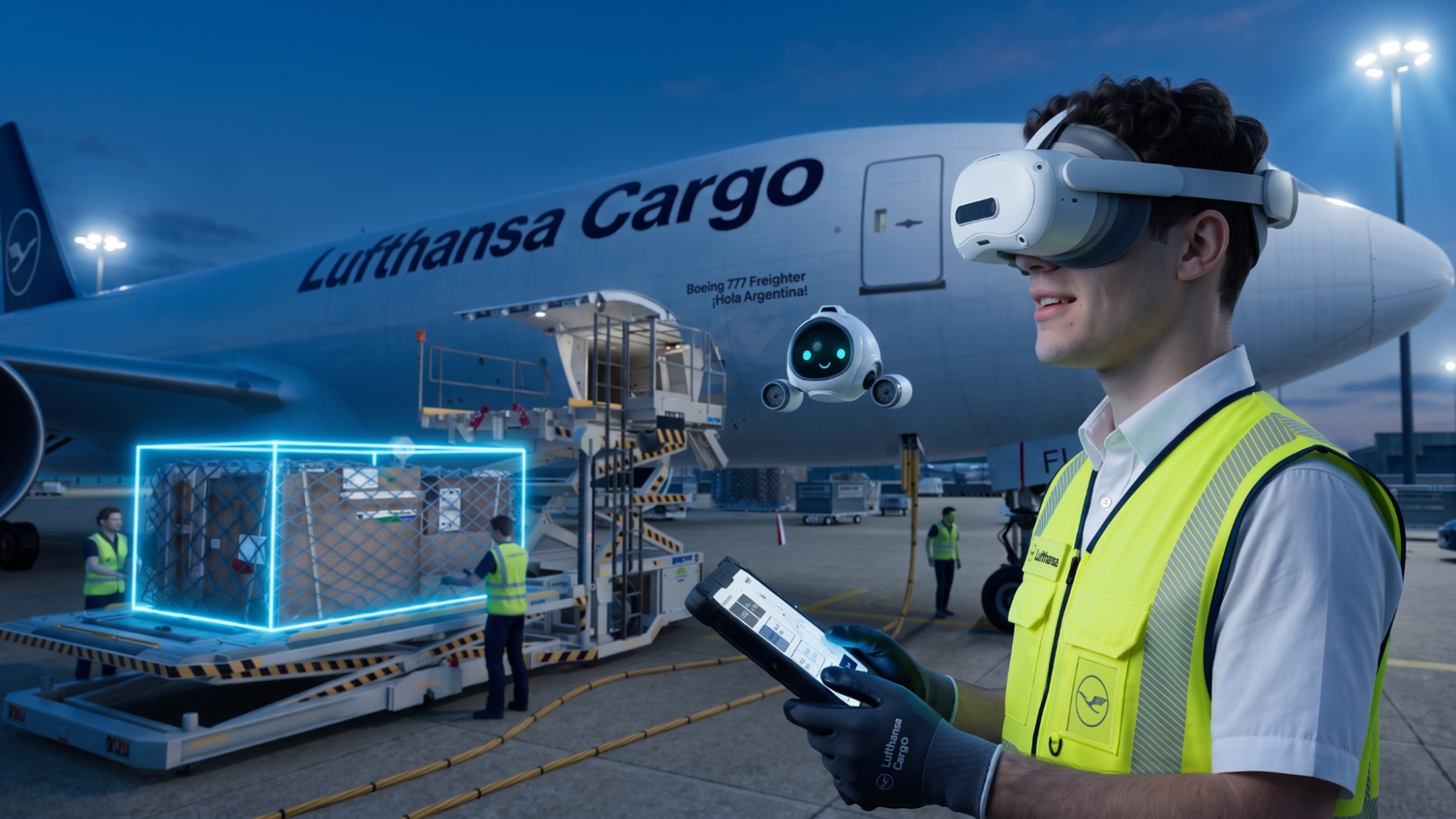
Visuals from the Lufthansa Cargo Ramp Agents application
3. Senior instructors, examiners, and panel operators:
- Instead of traveling to physical simulators, instructors use the proprietary "NMY System Operator" (Command & Control software) as a remote control station.
- From a tablet or desktop, they oversee, control, and legally evaluate examinations globally.
- The dashboard allows them to assist trainees via live voice communication, monitor multiple video streams, trigger real-time stress scenarios, and generate automated learning progress reports.
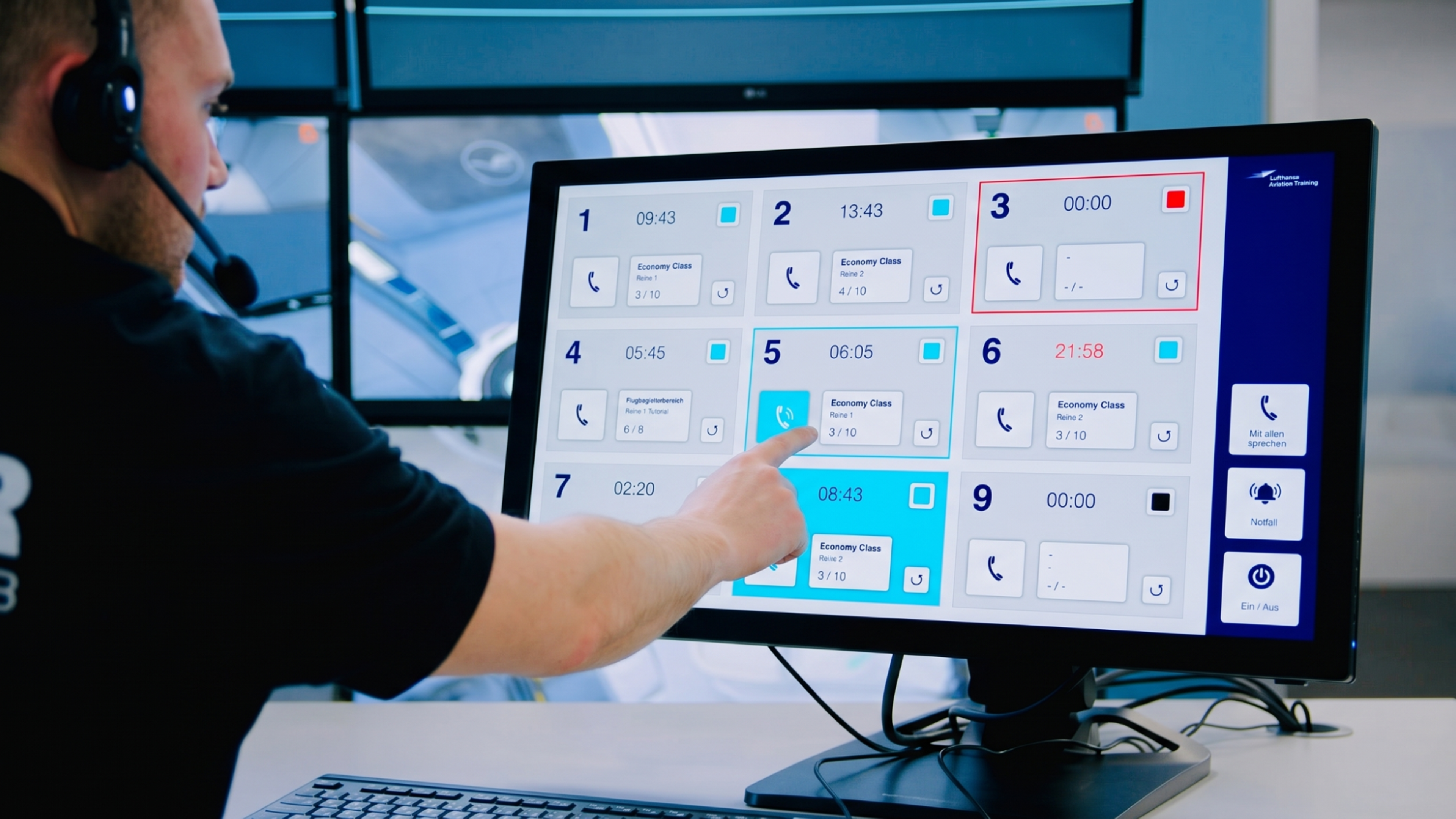
A trainer monitoring training sessions in a Lufthansa XR Hub
“With NMY's XR solution, we reduce training costs for Aircraft Loading Supervisors by up to 65% and minimize unproductive travel.”
Momo Ruzic - Lufthansa Group
Head of Aircraft Handling FRA , Lufthansa Cargo
How to train (and stress-test) employees from anywhere
There are two ways for Lufthansa’s employees to access the training modules:
- VR headsets located in XR hubs: For high-immersion spatial training, standalone VR headsets (utilizing mobile GPU architecture) with controller-free hand tracking are deployed within large-scale, multiuser XR Hubs at corporate training centers.
- For the highest-fidelity training scenarios that require heavy computational power, the ecosystem scales to PC-tethered VR (PCVR) systems, fully supporting high-end enterprise headsets.
- Remote-based mobile training: To support decentralized learning, the ecosystem deploys fallback, refresher, and pre-learning versions designed for remote-based and mobile training. These are accessible on desktop, iPads, mobile tablets, and browsers. Trainees can learn from anywhere, regardless of their available hardware.
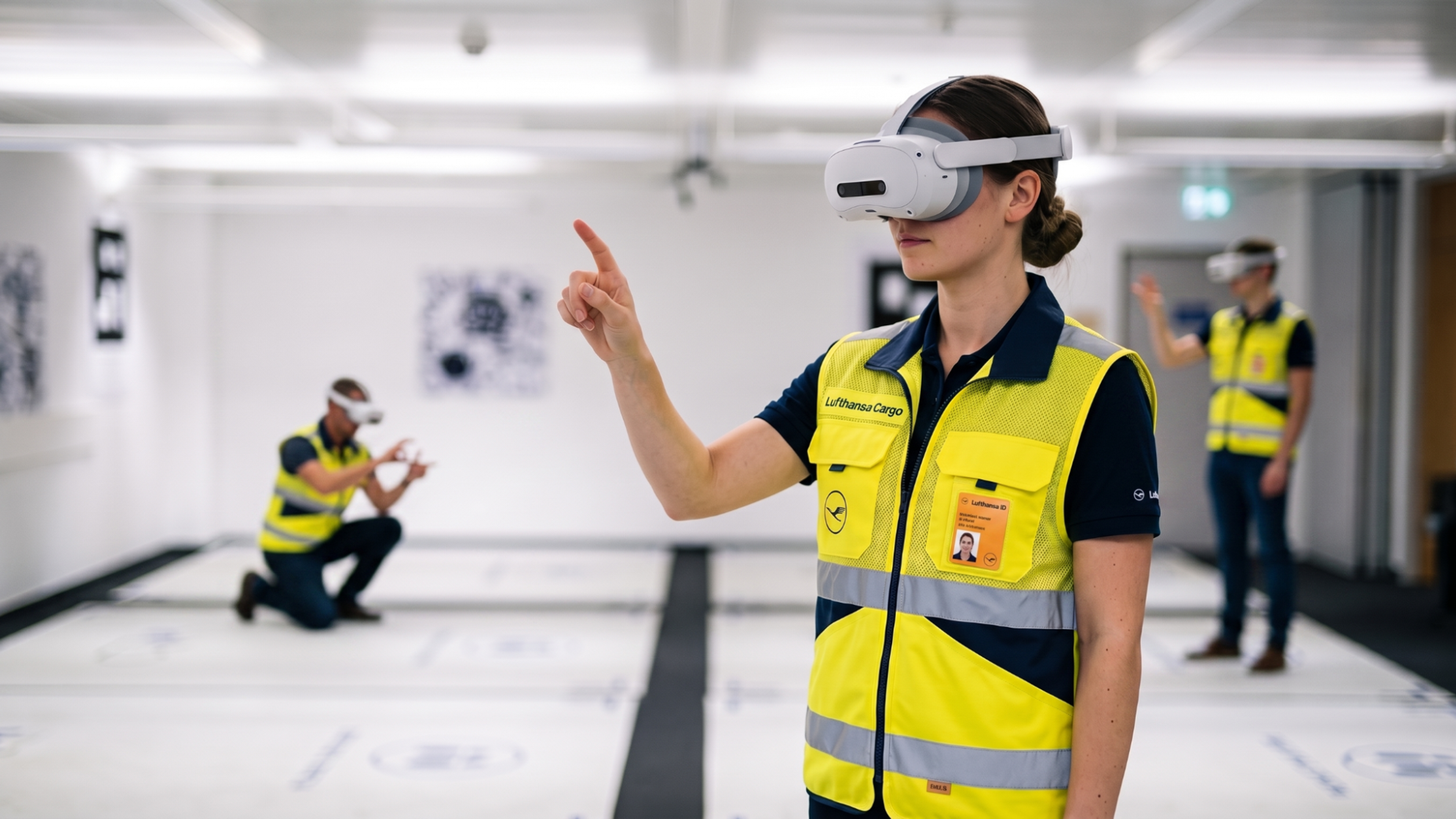
Immersive training in the Lufthansa Cargo Ramp Agents application in a Lufthansa XR Hub
Top three benefits of XR training
1. Total focus and high-stress muscle memory built through employees executing procedures with their own hands under realistic stress and hazard scenarios
2. Natural, room-scale immersion and controller-free spatial interaction
3. Reusable digital twins that can be deployed for different training scenarios and programs, maximizing ROI across the entire corporate group
What do employees learn inside the applications?
The motions and actions they need to do their jobs safely: Employees can use hand and voice interactions in highly detailed, 1:1 scale digital twins of aircraft and cargo equipment.
They train in all the motions they’ll use in the real world ‒ opening cabin doors, extinguishing virtual fires, and operating heavy ground machinery.
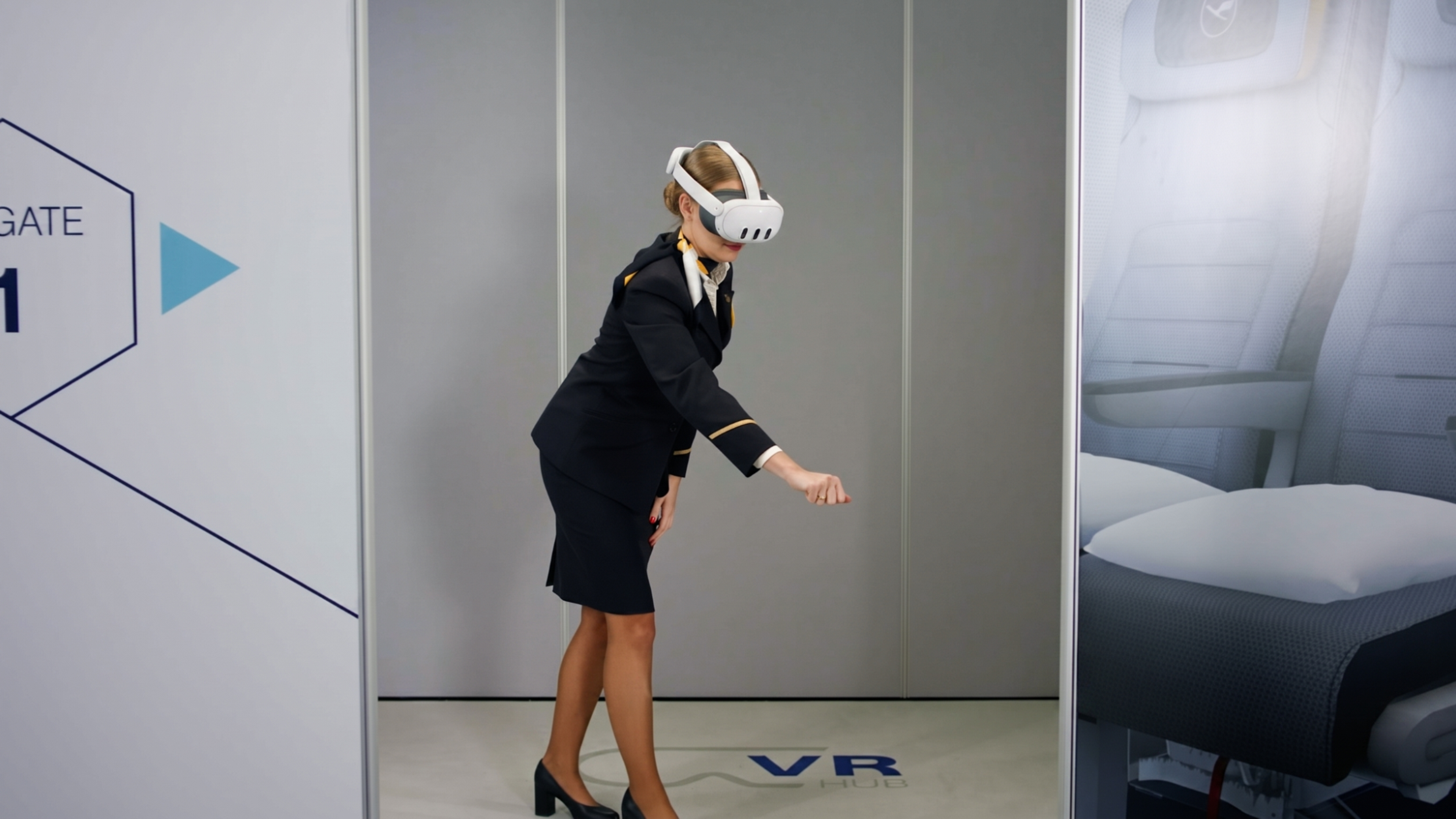
A cabin crew employee going through realistic motions in immersive XR
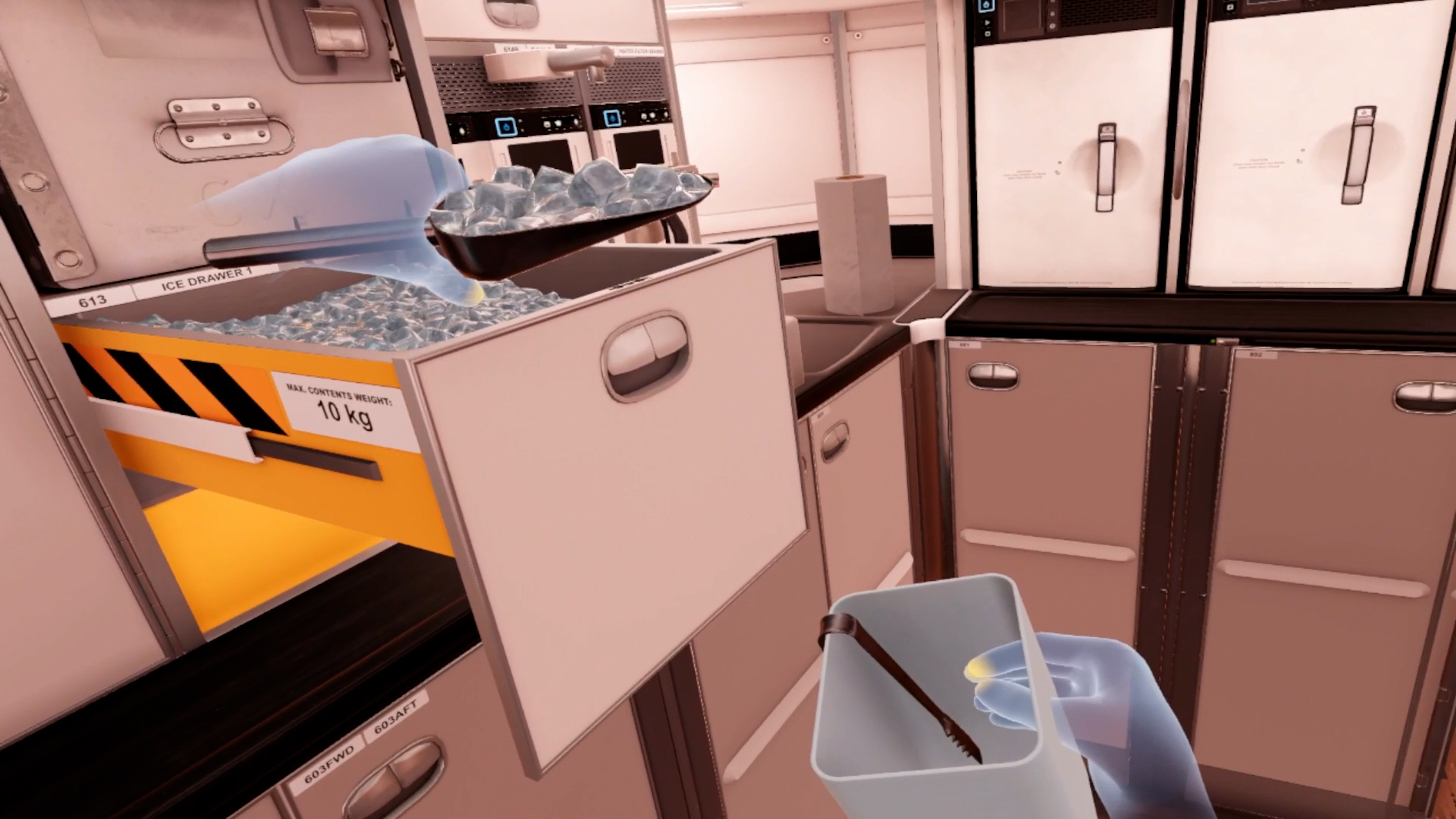
Detailed interactivity, high-fidelity visuals, and controller-free hand movements all contribute to employees building reliable muscle memory from their training that helps them retain knowledge when they’re on the job.
Virtual stress scenarios: Instructors monitor progress and trigger dynamic stress scenarios from a remote dashboard. Employees can safely experience and resolve extreme hazards, fires, and critical equipment failures that are physically impossible or too dangerous to simulate on a real aircraft.
“By experiencing complex virtual hazards under realistic stress, our teams enormously sharpen their operational confidence”, says Momo Ruzic, Head of Aircraft Handling FRA , Lufthansa Cargo.
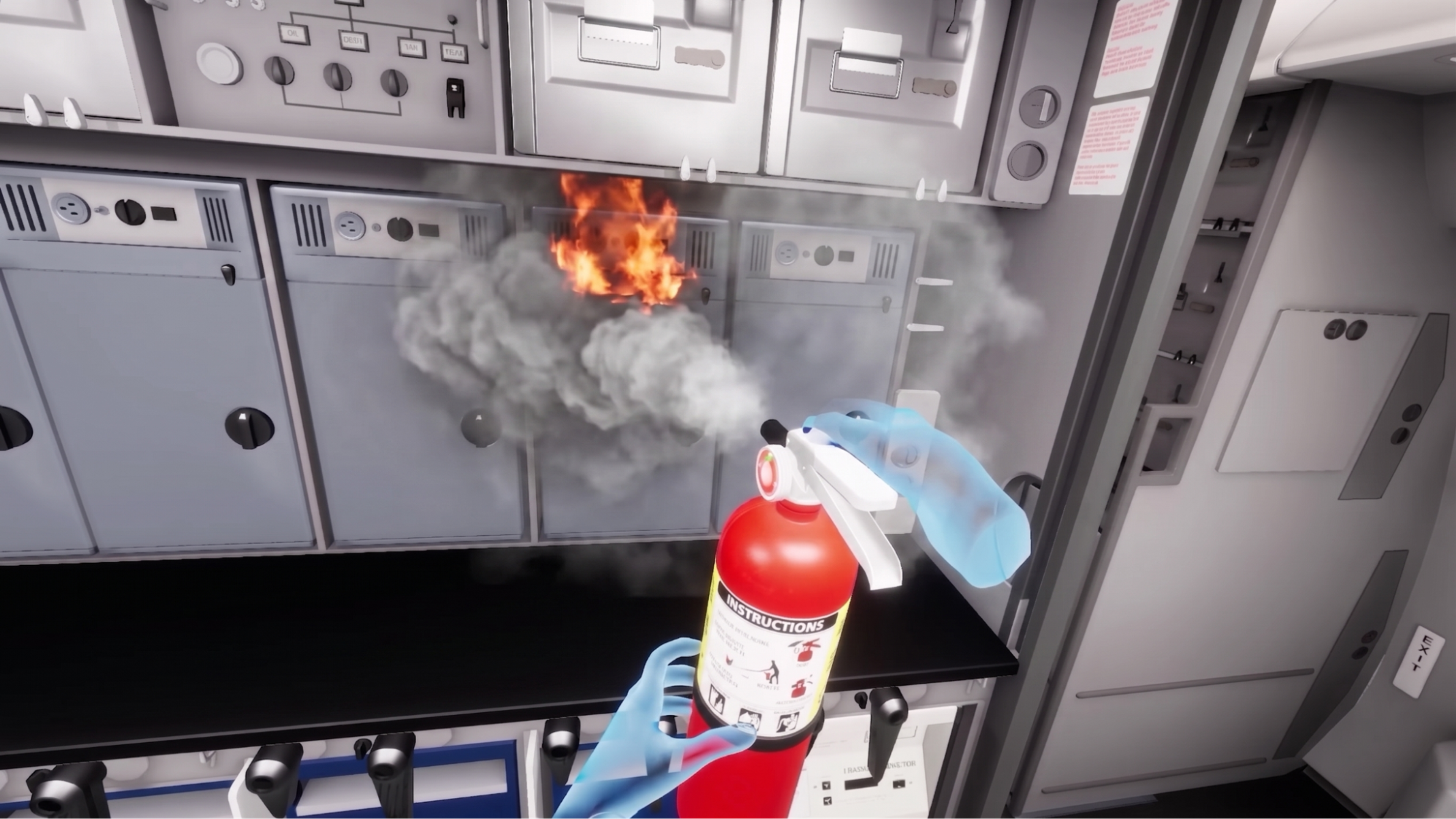
A virtual emergency situation training module helps employees understand and better retain the safety-critical knowledge they might need in real life.
The system then evaluates examinations automatically and synchronizes passed licenses in real-time with the corporate Learning Management System (LMS) and rostering system, with no manual administration required.
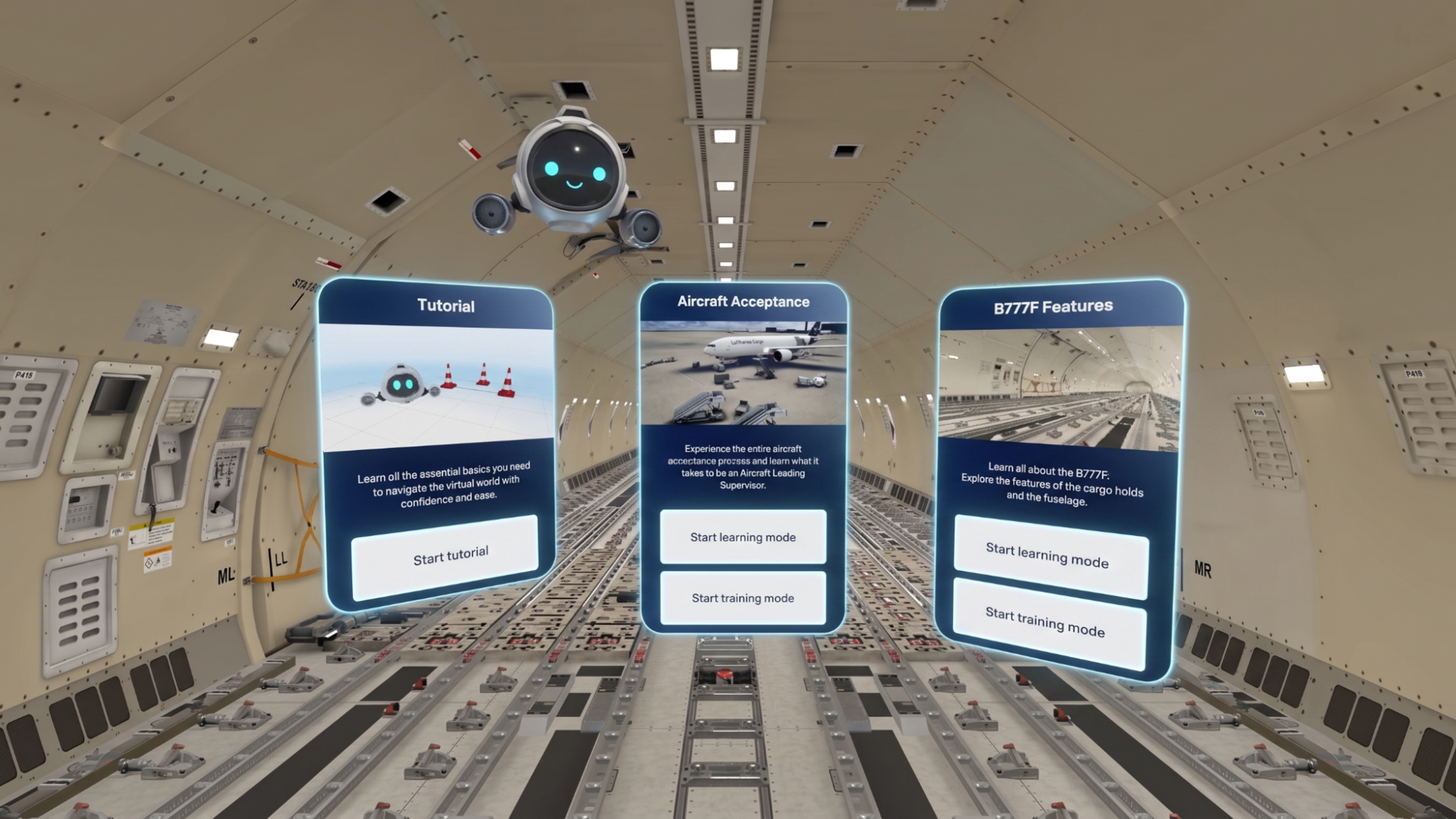
Menus in an NMY-developed XR training application for ground crew.
From the users: Results that stick, more confidence on the job
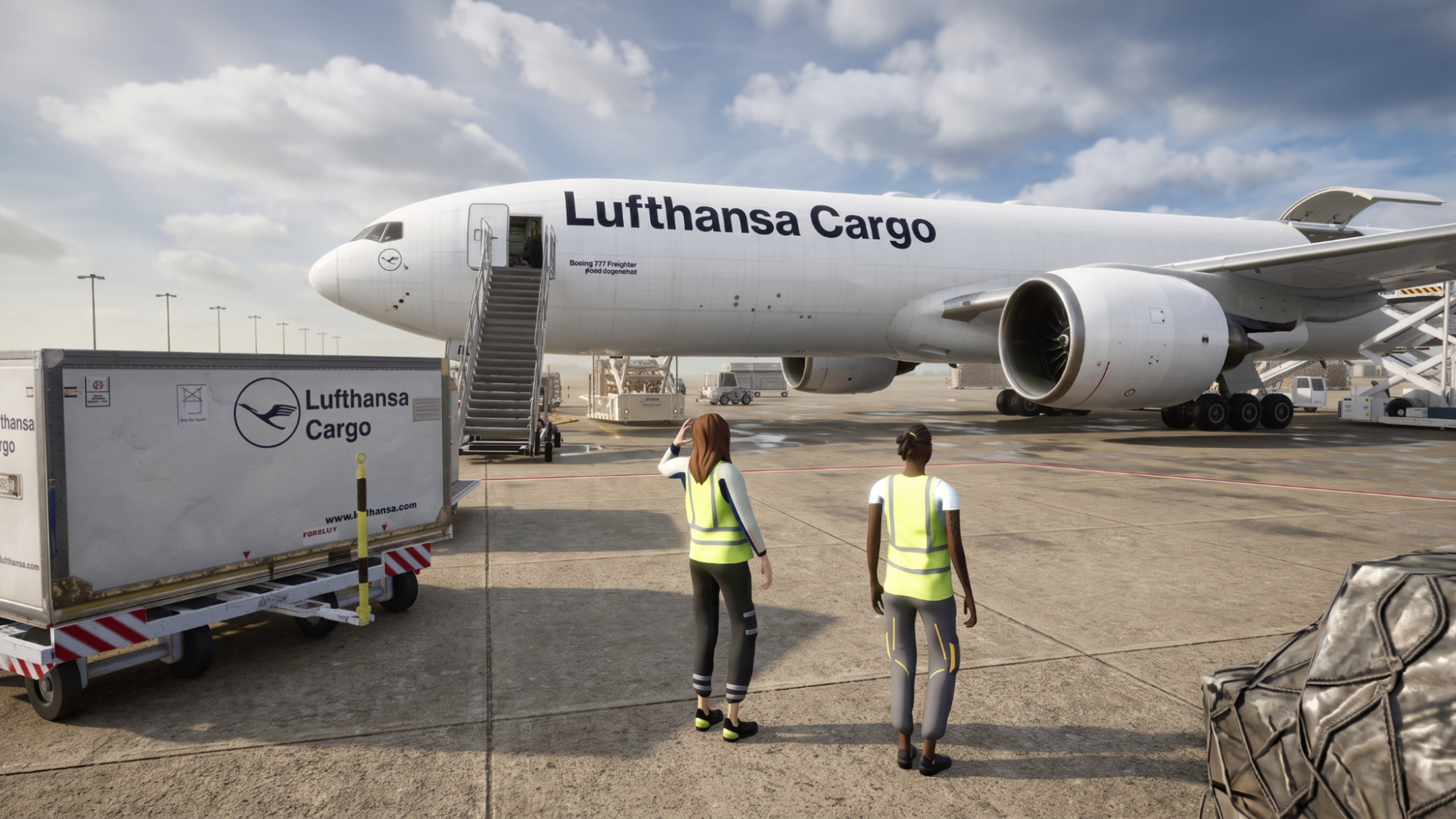
A digital twin of a Lufthansa aircraft on the apron
According to empirical client and post-training surveys, and NMY’s own internal research, the results for users of the NMY’s XR training modules include:
- Improved muscle memory and hazard response skills that keep them confident on the job.
- More technical and operational confidence: Natural interfaces like controller-free hand tracking and integrated voice control help remove the technological barrier for employees.
- More motivation and engagement during training, as the interactive, gamified mechanics turn routine compliance into an engaging experience.
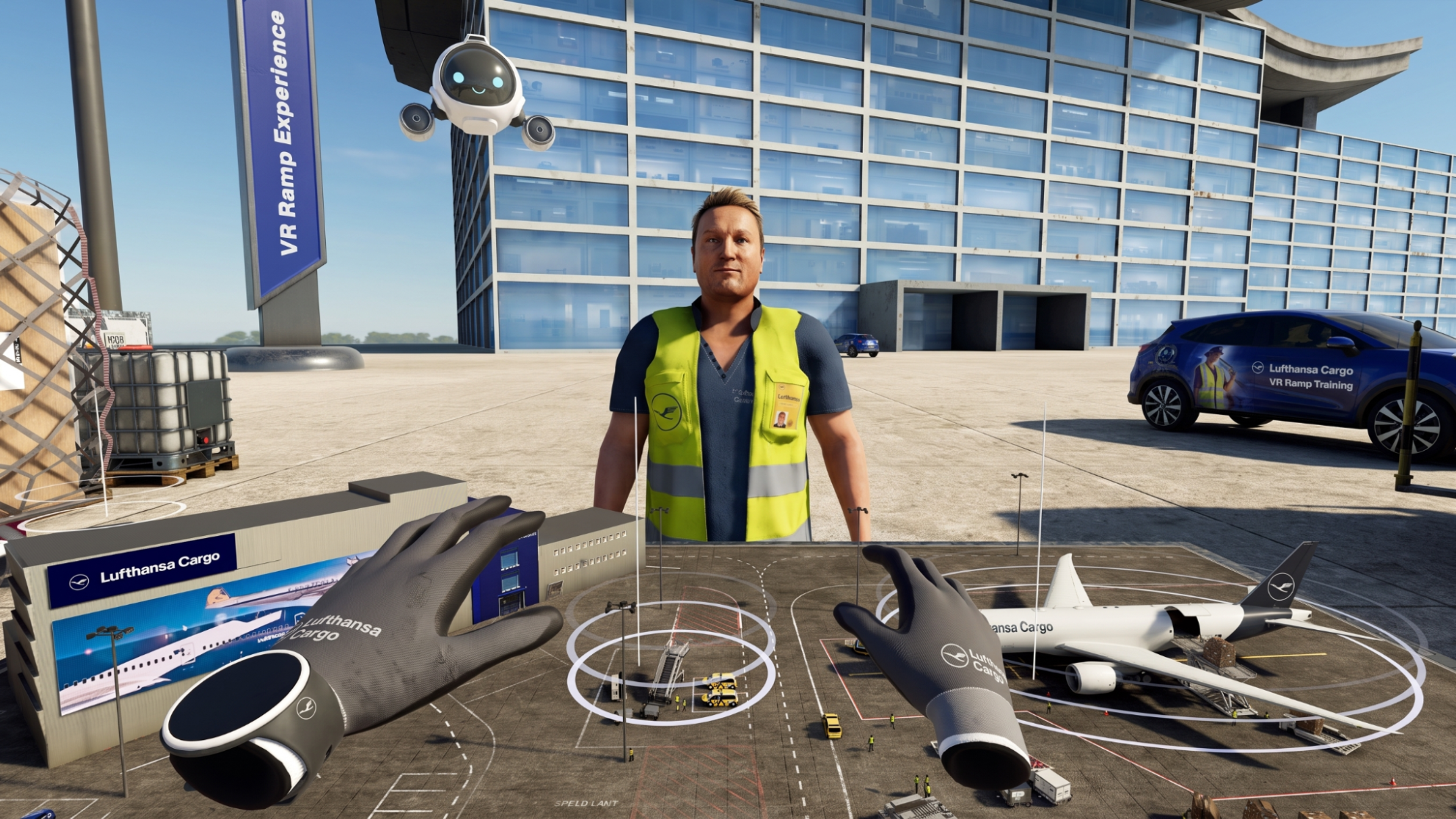
A menu from the Lufthansa Cargo Ramp Agents application
“Based on a survey we conducted with over 200 cabin crew members, close to 99% of them told us that physically interacting with the 3D environments deepens their spatial and mechanical understanding of complex technical processes. These are results that surpass the effectiveness of traditional textbooks and 2D videos,” says Sebastian Demmerle.
The high level of engagement extends far beyond formal internal surveys: Lufthansa has observed an increase in organic social media activity, with employees posting and sharing their immersive training experiences and achievements online.
“We believe this highlights the true magic of the application,” says Sebastian Demmerle. “It respects their time and intelligence, replacing passive learning with active mastery. Trainees feel a sense of agency and accomplishment, walking away with the confidence that they are fully prepared for critical, real-world emergencies.”
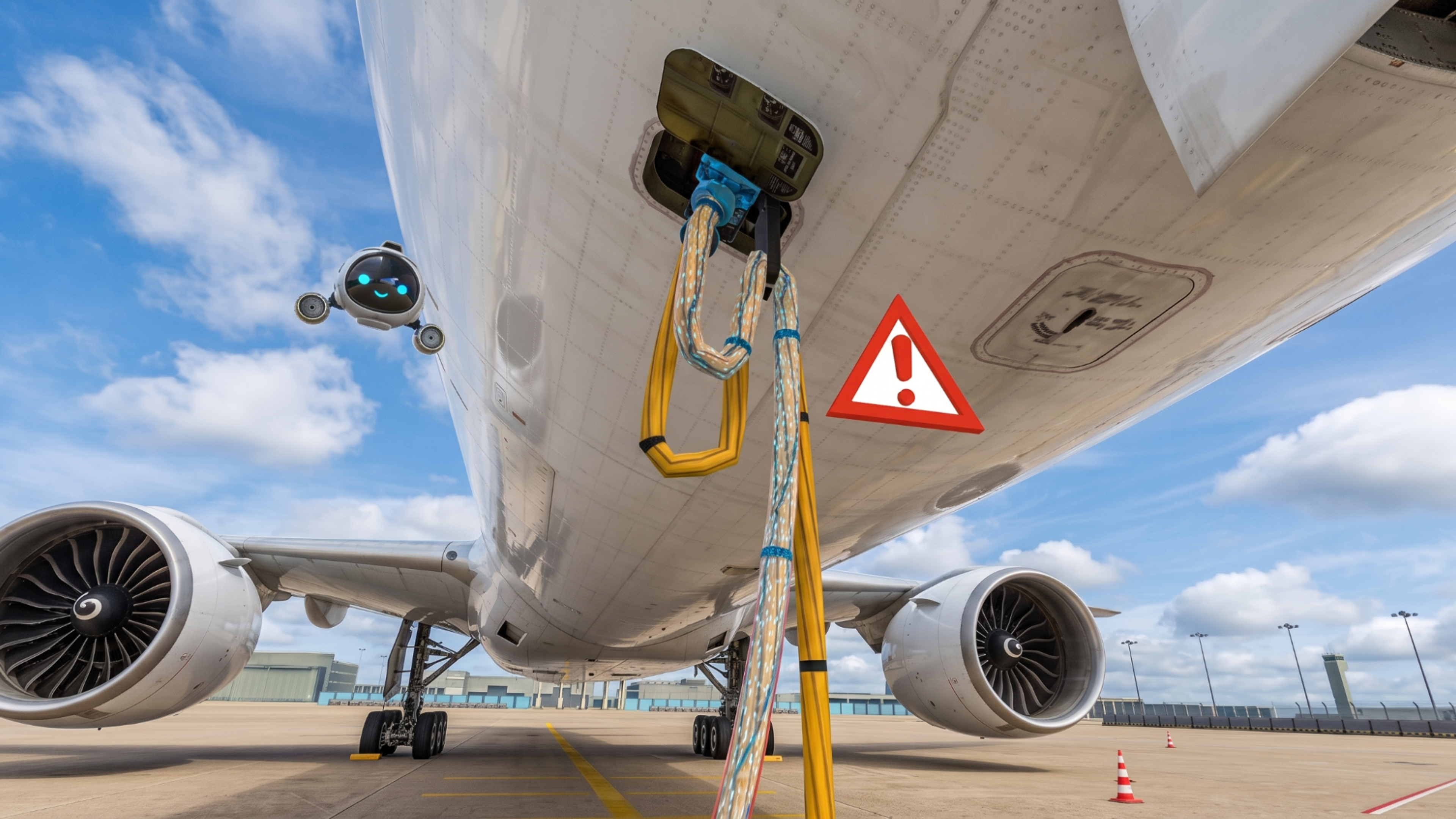
High-fidelity visuals with exact details help employees learn with more confidence.
Proof that XR-based training can meet the safety standards of commercial aviation
One of the most powerful proof-points for the efficacy of NMY’s XR training ecosystem is its absolute regulatory compliance.
The German Federal Aviation Office (Luftfahrt-Bundesamt / LBA), one of the world’s strictest aviation authorities, has certified NMY’s XR ecosystem as a legally valid examination. This historic approval allows aviation personnel to conduct and pass their mandated compliance exams entirely within virtual reality.
Once a user completes their test, the platform’s secure, zero-admin backend takes over. Built on the integration of custom APIs with Unity Industry, NMY’s platform evaluates each employee’s performance and transmits the passing grades and active licenses in real-time into the Lufthansa HR, rostering, and learning management systems.
Major cost and time savings for Lufthansa Group
NMY’s XR framework provides such pedagogical and economic advantages that it has now largely replaced physical mock-ups and real aircraft in training.
Based on Lufthansa Group’s estimates, their ROI so far includes:
- According to Björn Eckermann, a specialist in XR training technologies at Lufthansa Aviation Training Germany GmbH:
- Over 75% savings on operational training costs: Eliminating physical mock-ups and automating the examination and qualification workflow reduced manual admin instructional personnel effort.
- According to Momo Ruzic, Head of Aircraft Handling FRA , Lufthansa Cargo:
- Up to 65% reduction in training costs for their aircraft loading supervisors with the Ramp Agent vocational training (Lufthansa Cargo): Unproductive trainer downtimes, and expensive travel times, are reduced to an absolute minimum, without having to block real cargo aircraft for training purposes.
- Up to 50% fewer operational faults: Virtual training has helped reduce operational errors on the apron and during complex aircraft handling.
- Around 80% savings specifically in trainer travel costs: Qualified instructors conduct decentralized examinations remotely, eliminating most of their transit time, hotel costs, and unproductive downtime.
The win for NMY: Audit-proof enterprise validation
This ecosystem cemented NMY’s position as a leading enterprise system integrator. Successfully passing the strictest IT, data security, and safety audits from the German Federal Aviation Office (LBA) proves that their scalable, multiplatform XR architecture works at the highest global corporate level.
The Unity Industry foundation powering Lufthansa’s employee training
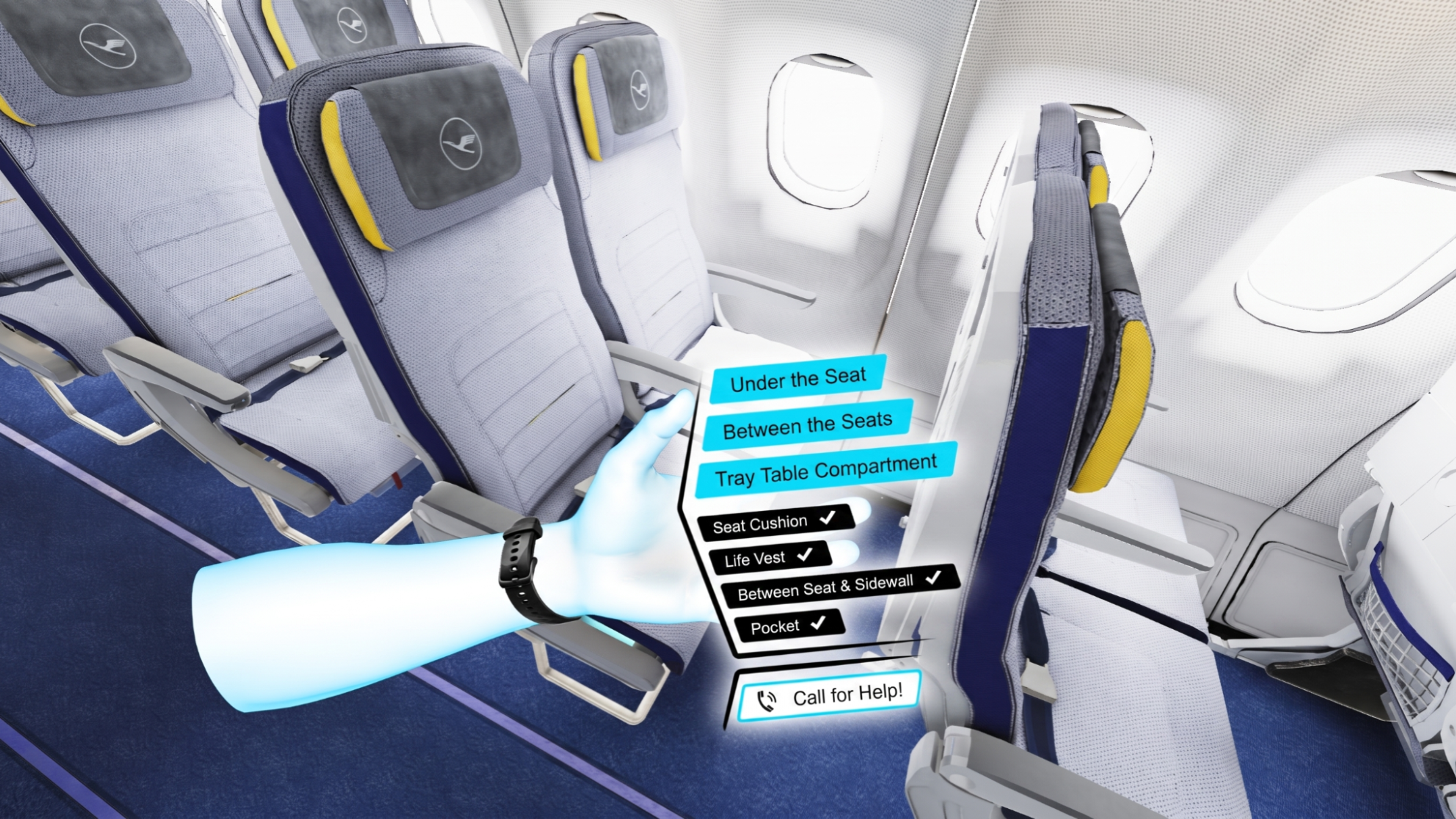
A UI Toolkit-developed user interface in the training module for cabin crew
Unity Industry’s real-time 3D platform and software suite serve as the core technical foundation for NMY’s enterprise XR ecosystem. It acts as the primary engine driving their multiplatform software strategy, allowing them to build, scale, and maintain safety-critical training applications for Lufthansa Group and other global clients.
"Unity [Industry] has been our trusted companion since day one. Its highly modular architecture allows us to build not just apps, but LBA-certified XR ecosystems at scale,” says Sebastian Demmerle. “By leveraging Unity [Industry] alongside our pedagogical models, we create digital twins that spark intrinsic motivation and can be reused across an organization.”
Currently, 15-20 professionals across five specialized teams utilize the technology including XR software engineers and Unity developers, technical artists, 3D artists and animators, UX/UI interaction developers, and QA and performance testers.
Their mission-critical Unity features include:
- Multiplatform deployment
- A robust XR stack: Unity’s OpenXR Plugin, flexible XR Interaction Toolkit, and XR Hands package enable NMY to deliver intuitive and natural user experiences
- Unity’s physics, rendering, custom shader, and lighting tools
- Openness and extensibility: Unity is the central hub to which they connect their interactive client software with back-end enterprise architecture
- UI Toolkit and Unity Localization package
- Unity Package Manager (UPM) to modularize and standardize their code base
- Addressables
- The Data-Oriented Technology Stack (DOTS), Burst compiler, and job system
“A key advantage of Unity [Industry] for us is its layered modular architecture: we can rapidly create MVP builds using high-level APIs, “ says Mark Peter, team lead developer, NMY. “When tackling more complex challenges, we can leverage powerful low-level features like Addressables, DOTS, Burst and the C# Job System to deliver the required performance. Ultimately, this allows us to implement high-fidelity, cross-platform aviation training without compromising on realism, even on standalone VR."
NMY has no shortage of ambitions for the evolution of their XR platform. They plan to scale it to include new training modules for more roles, from maintenance, to pilots.
AI solutions and dynamic scenarios are on the roadmap, so they can move from pre-scripted training scenarios to dynamic, unpredictable AI-driven environments with smart NPCs for realistic role playing.
They’ll expand their digital twins to include autonomous luggage tugs, robotic ground handling equipment, and teleoperation. Finally, they’ll target wearable platforms and incorporate haptics and biometrics into the training experiences.