5 ways to build better employee training programs

Executive summary
Onboarding, developing, and retaining employees is an ongoing challenge across industries. Throw in the added factors faced by certain sectors such as meeting stringent safety needs and adhering to regulated training specifications, and training becomes a constant – and essential – need.
Here we dive into the topic of training from the perspective of industrial organizations. We share guidance on how to improve the outcome of your training programs, and ultimately to achieve business objectives through more effective workforce development. We cover the topic in three sections:
An overview of the status quo: Including common challenges, desired outcomes, and where traditional training underperforms
5 ways to boost training programs: Covering advice on how to ensure better trainee engagement and skills retention by making use of the 3D data you already have. Plus, we take a look at real-life examples of immersive training applications.
What you should do next: How to get the Unity tools for creating training programs
Read on to discover why current solutions just aren’t cutting it, and the top 5 ways you can improve your training program.
Current solutions just aren’t cutting it
Traditional methods are falling short
In 2023, American companies spent between $480 and $1,420 per employee on training [Statista], and yet learners forget 70% of the content within 24 hours and nearly 90% within a month [HDI]. Ninety percent of executives surveyed by Accenture agreed that training methods needed to be more effective. There is a significant need to embrace the technological advances of Industry 4.0 to make training more effective, memorable, and scalable.
The drive for more impactful training is recognised at all levels of an organization. From senior management to training and development teams, it is widely acknowledged that there is scope for training to be better.
The executive viewpoint
For organizational leaders, the need for improved training is driven by some key factors:
- Meeting or exceeding industry and government standards for training hours, scenarios, and safety
- Reducing the time and cost of training employees, including spending on travel expenses for location-based training
- Minimizing downtime of critical assets, both during in-person training procedures and because of operational errors
The training manager viewpoint
For in-house training development and delivery teams, the challenges are based on the technology resources required to maintain and scale programs. For example:
- Creating accurate models of products, assets, and facilities
- Bringing in new assets, procedures, or environments
- Optimizing training programs for different end-user interfaces such as mobile or extended reality (XR)
- Deploying existing training to additional hardware, such as new headset technology
What do you want your training programs to deliver?
First and foremost, you need your programs to be efficient and effective. From SMEs to global multinationals, small boosts to training effectiveness can create significant gains. The wish list for effective training can be summed up in three areas:
High-quality training
- Enhanced learning outcomes and retention
- Improved safety of employees
Cost-effectiveness
- Lower expenses related to location-based training (travel, venue, instructor fees)
- Reduced downtime for critical assets
- Faster onboarding of new employees
Scalable solutions
- Easily expandable to encompass new assets, processes, and technologies
- Accessible across multiple devices, facilitating learning anywhere, anytime
Tip 1: Embrace immersion
Key outcome 1
✔ Better knowledge retention
Key outcome 2
✔ Minimal travel and asset downtime costs
There are good reasons why many companies are transitioning away from conventional training methods such as presentations, classroom settings, and location-based training, and embracing immersive training.
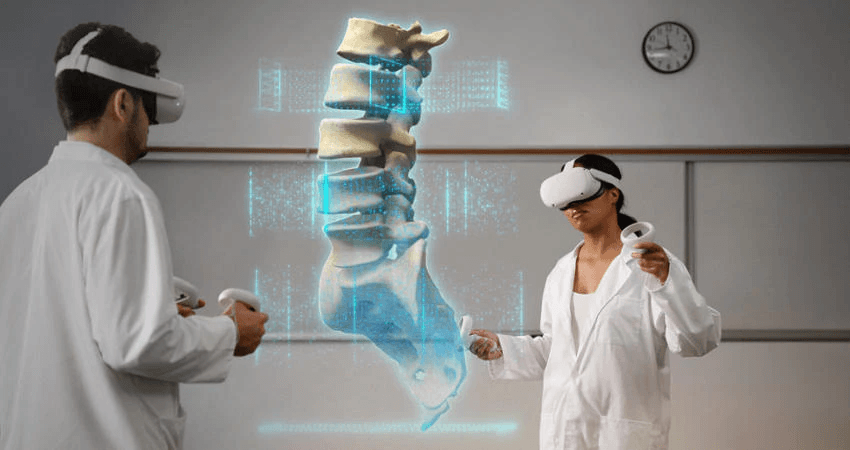
This method of training places the learner into a responsive 3D environment that accurately represents the location and surroundings applicable for that training scenario. Inside that setting, learners are able to interact with assets, surroundings, and other people. They build a greater understanding of the products, people, and processes they will work with, enabling more knowledge transfer and better retention of material.
Immersive training has proven to be more effective in many ways, including:
- Faster: According to this study, learners completed the curriculum 4x faster than classroom training and 1.5x faster than with an online course.
- Fewer errors: In this study, VR-trained surgeons made 6x fewer errors.
- High retention: Over 400% increase in long-term retention for VR-trained students in this study.
As well as providing more effective training, there are cost reductions inherent in immersive training, including:
- Reduced travel costs, as training can take place in a virtual environment without relocating staff to a specific location
- Minimized downtime of critical assets, as the bulk of training can take place in a virtual environment, before transitioning skills to the real world
“We wanted to provide our workers with a new kind of training that could fundamentally change their behavior ... VR can do that because you can put participants ‘at risk’ in a simulated environment without endangering their lives.”

Tania Sjöberg - Skanska
Project leader Step into Safety & Leadership Developer
Collaborating with creative VR and AR agency OutHere, Skanska implemented a Unity-based VR experience into their standard worker-safety training program.
Tip 2: Create training programs with your own 3D data
Key outcome 1
✔ Training on current products and settings
Key outcome 2
✔ No need to build new product models
With immersive training, it is important to accurately represent not only the asset/product that is the focus of the training, but also the key elements of the environment(s) in which it operates. For example, this could be a specific machine operating on a production line in a factory-floor setting.
The challenge is how do you get accurate 3D models of the machine, and its environment, that will work in your immersive training program?
With Unity’s real-time 3D tools, the solution is straightforward. There are built-in workflows that take the 3D data you already have and optimize it for your training environment. This includes CAD or BIM models of facilities and products, and environmental data such as photogrammetry, LIDAR scans, etc. This eliminates the need to recreate complex data models and frees up valuable time and resources.
Making use of product and environment data ensures that the product(s) your learners are training on are accurately represented. This includes any variations that the trainee might need to know, such as different machine settings or using various accessories.
This allows for straightforward exposure to realistic training scenarios, without the need to take assets offline or for trainees to travel to different locations to experience a variety of setups.
“Increasingly it is necessary to blend traditional techniques with modern navigation aids and the support of the wider navigation team including Tug Masters, VTS and other stakeholders. Simulation is an essential tool to train the navigation team.”

William Barker - Harwich Haven Authority
Marine Director (Harbour Master)
HR Wallingford creates simulated environments for true-to-life immersive vessel pilot training.
Tip 3: Build flexible training that can be used over and over
Key outcome 1
✔ Build once, deploy to 20+ platforms
Key outcome 2
✔ Deliver training to your workforce wherever they are
Break free from the restrictions of “build once, use once” training applications. By creating a program once with Unity’s real-time 3D tools, it can be easily repurposed to train on any task, on any device.
The typical training program structure consists of three parts: environment, product(s), and processes. In real-time 3D, those components can be delivered in multiple combinations. Whether you want to deliver micro-task instructions for quick reminders, comprehensive machinery overhaul guidance, or any other instructional configuration, with immersive training datasets you can meet any demand.
Enable your training team with much flexibility by embracing a “mix and match” approach to training delivery.
And you can boost the flexibility of your training further knowing that you can deploy the application to whatever device and operating system your trainees have access to:
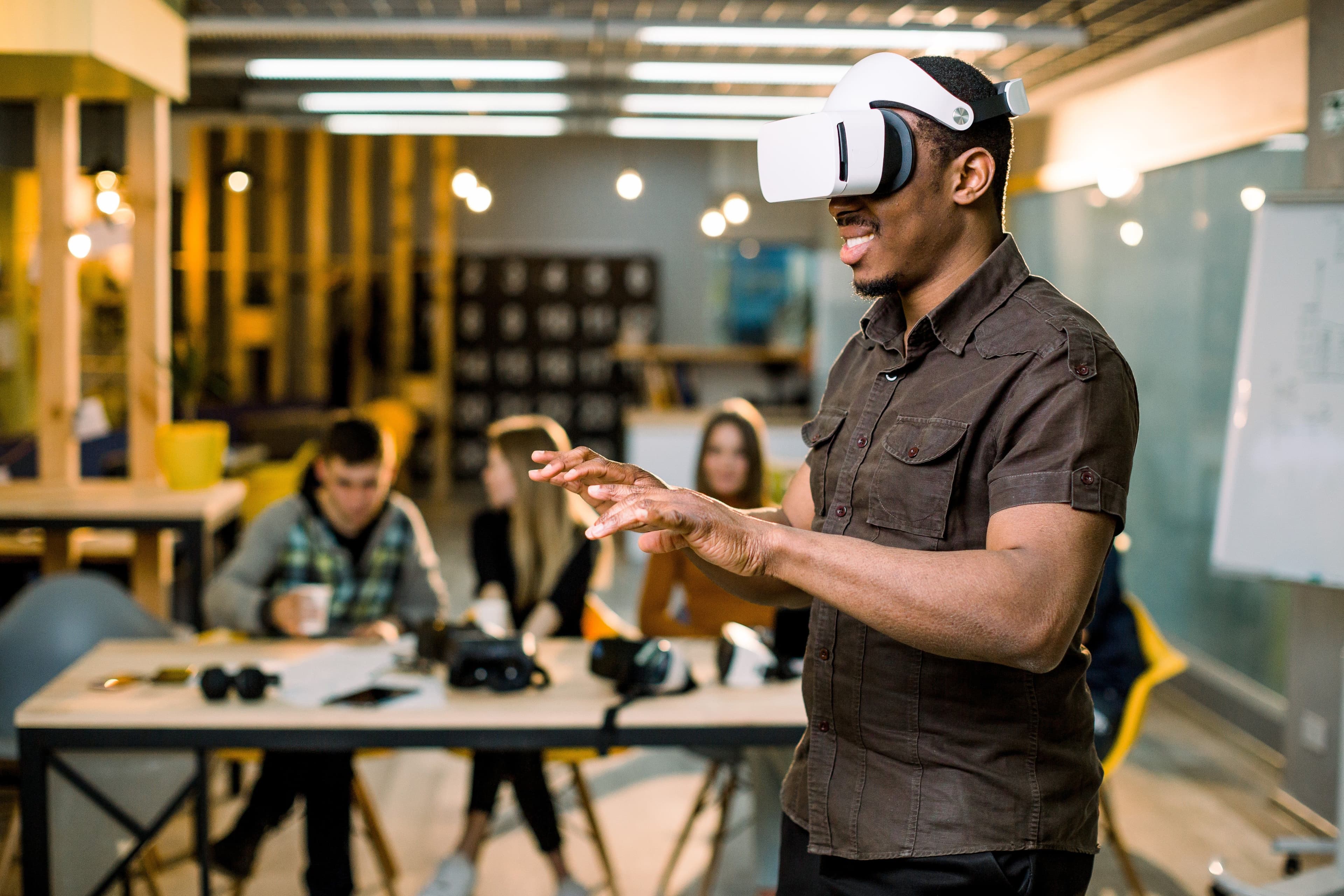
- Virtual reality (VR) headsets: Provides in-depth training that builds muscle memory and creates a deep connection to the training subject
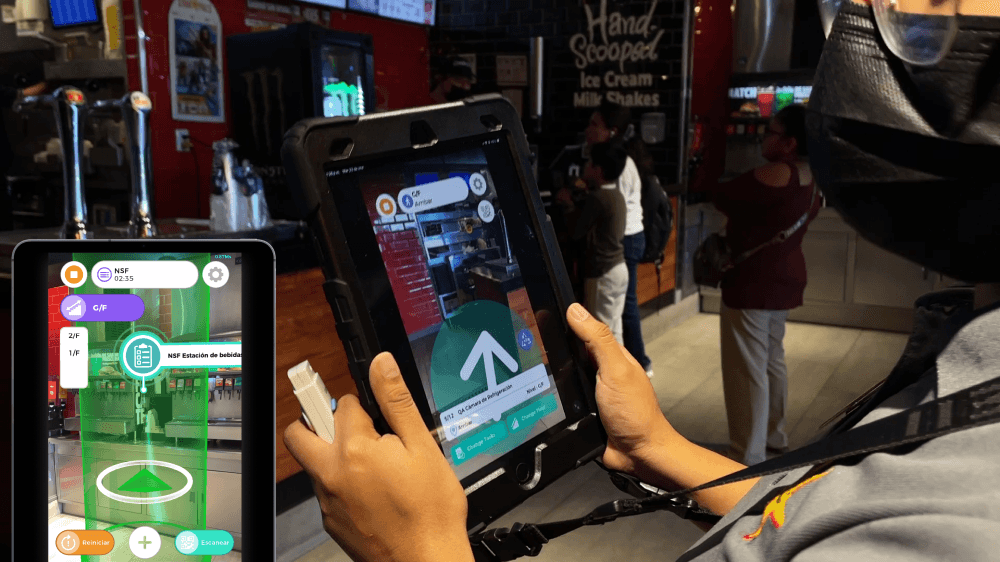
- Mobile applications: Ideally suited to rapid task-based training that can be delivered in the field. Also a great option for training you want to make broadly available across a large workforce
- Web-based (WebGL): Delivers “always up to date” content to the broadest possible audience through in-browser applications
By creating your real-time 3D training using Unity, you can build once and deliver to more than 20 platforms.
Tip 4: Take back control of your training programs
Key outcome 1
✔ Adaptable to new technologies
Key outcome 2
✔ Retain control of your training programs in-house, expand and adapt easily
Regain control of your training programs by removing the need to outsource development and maintenance. Adopting Unity technology, you can provide in-house support for your training programs, which also enables better management of the program by making it:
- Expandable: Easily update training programs with new 3D assets and products.
- Adaptable: Fine-tune training to specific needs such as teams, regions, products, and more.
- Future-ready: Be poised to scale with your business, with the confidence that you can deliver training to new hardware, on new products, to anyone, anywhere.
“The real-time aspect of the game engine is probably the most important piece for us because often ... we have to move fast. We get an imaging study done, we create a 3D model that we get ... into the surgeon’s hands as fast as possible.”

Dr. Ryan Moore - Cincinnati Children's Hospital
Pediatric Cardiologist & Director of Digital Health Innovation
Cincinnati Children’s Hospital adopted immersive technology to develop ways to enhance and improve surgical planning procedures.
Tip 5: Build in guidance and feedback
Key outcome 1
✔ Better understanding and knowledge retention
Key outcome 2
✔ Include remote expertise without extra cost
Encourage your workforce to feel supported and engaged in their training by providing a means for them to learn independently under expert guidance, to receive constructive feedback on their training performance, and to reinforce learning by rerunning training scenarios as and when it suits them.
Here are three best practices for building in guidance. Make sure your immersive training program:
- Includes a user interface that guides users to complete the required tasks. This could mean visual cues, pop-up windows and/or written instructions.
- Monitors how the trainee interacts with the task, providing prompts if they are required.
- Provides feedback on trainee performance. This could include the option to reset the training program and rerun the training scenario to reinforce learning.
You could also consider providing additional feedback by embracing the collaborative nature of immersive training, and have experienced instructors join the trainee in the virtual environment. Trainees will feel the benefit of working in the same shared space and gaining immediate feedback. Alternatively, several instructors could view the training remotely, and join the learner in a virtual feedback session once they have completed the program.
“Unity has various assets that can be effectively used by small development teams like ours. Unity is also optimized for co-development by using cloud technology, so we’ve been using Unity since the beginning of this project.”

Chidon Ahn - Augmented Knowledge Corporation
Chief Architect and AR Developer
Augmented Knowledge Corporation created immersive aircraft maintenance training.
Now’s the time to embrace immersive training
Many studies have shown that traditional training in a classroom provides limited understanding, and that training in the field is expensive and inflexible. Immersive training applications powered by Unity increase employee skills retention and recall by delivering detailed and personalized learning experiences. With Unity, you can create faithful, full-fledged 3D models of your facilities and products, and build compelling and effective training scenarios, to ensure workers are prepared for every process, customer, or crisis.
Get the e-book
Fill out this form to access cutting-edge insights and solutions from industry experts